Choosing CRM software in Malaysia is not only about features. A good system should fit your team size, budget, language needs, and existing tools. It should also be easy to adopt, not just easy to buy.
For many Malaysian SMEs, the real problem starts when leads sit in spreadsheets, sales follow-ups depend on memory, and customer history is spread across email, WhatsApp, and separate support tools. A CRM fixes that by giving your team one place to track contacts, deals, tasks, and service activity.
This guide explains what CRM software is, how to compare CRM vendors in Malaysia, what local businesses should check before buying, and which tools are worth shortlisting.
- What Is CRM and Why It Matters in Malaysia
- The CRM Landscape in Malaysia and Southeast Asia
- Key Criteria for Choosing CRM in Malaysia
- Top CRM Vendors and Solutions for Malaysia
- Implementation Best Practices and Pitfalls
- ROI and Business Justification for CRM in Malaysia
- Buyer’s Roadmap and Next Steps
- Frequently Asked Questions on Top CRM Software in Malaysia
- List of Resources
What Is CRM and Why It Matters in Malaysia
CRM stands for customer relationship management. In practice, it means software that helps a business store customer data, track sales activity, manage follow-ups, and keep service conversations organized.
For a Malaysian business, that solves a common growth problem: customer information grows faster than the team can manage it manually. A startup may begin with shared spreadsheets.
A sales team may later add email tools, chat apps, and separate reporting files. After that, work slows down. Leads get missed. Two people contact the same prospect. Managers lose visibility into the pipeline.
A CRM system helps bring that work into one process. For many buyers, the question is not only which CRM software Malaysia offers, but which CRM system in Malaysia fits their sales process best.
Core modules and capabilities
Most CRM software in Malaysia includes these core functions:
✔️ Lead and contact management
Store customer names, company details, source, notes, and communication history in one place.
✔️ Opportunity and pipeline tracking
Move deals through stages such as new lead, qualified lead, proposal sent, and won or lost.
✔️ Task and follow-up automation
Create reminders, assign sales actions, and trigger messages after form fills, calls, or meetings.
✔️ Customer service records
Some CRMs also track support cases, complaints, renewals, and post-sale communication.
✔️ Dashboards and reporting
Managers can see deal value, conversion rates, rep activity, and forecast trends without building manual reports.
For SMEs, these CRM features matter because they reduce manual admin and help teams respond faster. Competitor pages also highlight the same basics, but they usually stop there and do not explain how these modules affect day-to-day work in a local business.
CRM vs ERP, marketing automation, and helpdesk
These tools are related, but they are not the same.
📌 CRM manages leads, sales pipelines, customer communication, and account history.
📌 ERP manages wider business operations such as inventory, purchasing, orders, invoicing, and finance.
📌 Marketing automation focuses on campaign workflows like email sequences, segmentation, forms, and lead nurturing.
📌 Helpdesk software handles support tickets, service queues, and customer issue resolution.
A growing business in Malaysia often needs more than one of these tools. The key is knowing which system should own which data.
A simple rule works well:
- use CRM to win and manage customer relationships;
- use ERP to fulfill orders and control operations;
- use marketing automation to run campaigns;
- use helpdesk to manage service issues.
This is also where integration matters. If your CRM does not connect well with ERP or accounting tools, sales may promise stock that is not available, or finance may re-enter customer data by hand.
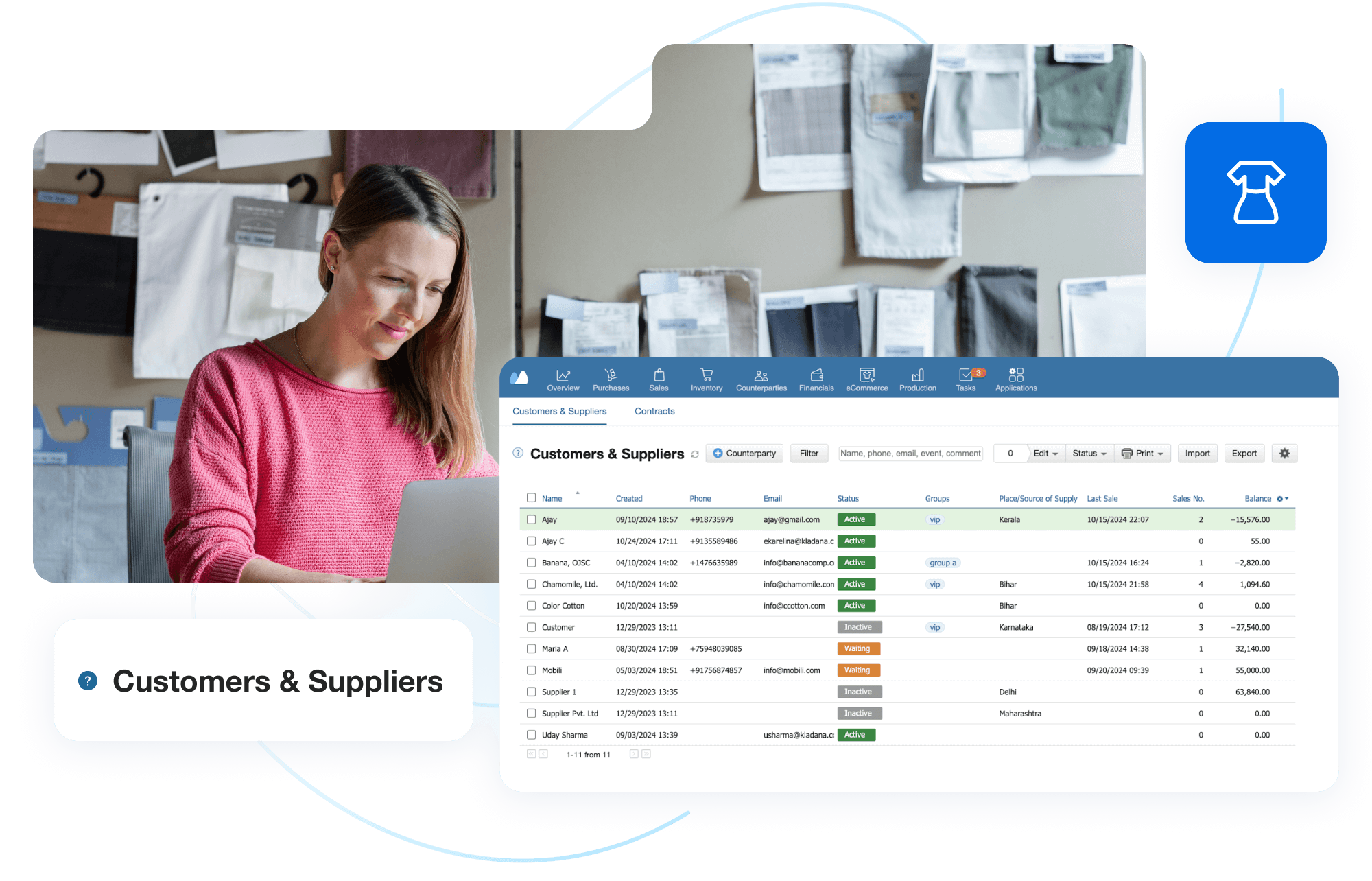
Kladana ERP offers integrations with CRMs such as HubSpot and Salesforce. It also includes an independent Customer & Supplier module for manufacturers: a more affordable, easy-to-use alternative with a clean interface that keeps CRM simple and connected to production and inventory.
The CRM Landscape in Malaysia and Southeast Asia
Growth drivers in Malaysia and Southeast Asia
CRM demand in Malaysia is growing for a simple reason: more businesses now sell, support, and market through digital channels, but many still manage customer data across too many separate tools. When that happens, teams lose speed and managers lose visibility.
A CRM helps fix that by turning scattered customer activity into one process. Malaysia’s wider SaaS market also points in the same direction. Grand View Research says the country’s SaaS market reached USD 1,116.0 million in 2024 and may grow to USD 2,408.5 million by 2030.
At the regional level, CRM is also growing across Southeast Asia. One widely cited estimate from Astute Analytica puts the Southeast Asia CRM market at USD 2,157.5 million in 2023, with a possible rise to USD 4,105.3 million by 2032.
What still slows CRM adoption
Growth does not mean adoption is easy. Malaysian SMEs still face the same rollout issues seen in many other markets: poor data quality, weak process design, limited user buy-in, and hard integrations with ERP, accounting, telephony, and support tools.
Data privacy is another key factor. In Malaysia, the Personal Data Protection Act 2010 (PDPA) regulates the processing of personal data in commercial transactions. That means CRM buyers should check where data is stored, how access is controlled, what security features are included, and how the vendor handles consent, retention, and third-party processing.
What this means for a buyer in Malaysia
For Malaysian companies, the CRM market is no longer only about choosing a famous brand. The real question is whether the system fits local operating needs: English and Malay support, mobile usage, local partner help, compliance awareness, and smooth integration with ERP or accounting software.
A CRM that looks strong in a global ranking can still be a weak fit for a local SME if setup, support, or integration becomes too heavy. So, this guide includes local vendors alongside globally recognized solutions.
Key Criteria for Choosing CRM in Malaysia
A business should not choose CRM software by feature count alone. A good mobile CRM in Malaysia should let sales reps update deals, check contact history, and log follow-ups from their phones. The better approach is to ask: will this system match how our team sells, follows up, reports, and grows over the next two to three years?
Localization
For Malaysia, localization starts with basics. Can the team work comfortably in English? Is Malay support available where needed? Does the system handle local date formats, currency fields, and region-specific reporting needs without workarounds?
This may sound minor, but small friction adds up. If users need to “translate” the system in their heads every day, adoption drops.
Data security and compliance
CRM software stores names, emails, phone numbers, deal notes, support history, and sometimes payment-related context. That makes security a buying issue, not an IT afterthought.
At minimum, look for:
- role-based access,
- audit logs,
- data export controls,
- backup and recovery policies,
- encryption in transit and at rest,
- vendor clarity on PDPA-related handling.
Malaysia’s PDPA applies to personal data in commercial transactions, so CRM buyers should ask vendors direct questions about privacy and data management before signing.
Deployment model: cloud, hybrid, or on-premise
For most SMEs, cloud CRM is the easiest starting point. It reduces upfront infrastructure work, speeds up rollout, and supports mobile access. That matches Malaysia’s strong internet and mobile environment.
Hybrid or on-premise options may still matter for businesses with stricter internal rules, legacy systems, or sector-specific data concerns. Still, those models usually bring more setup and maintenance cost.
Integration with ERP, accounting, marketing, and telephony
This is one of the most important checks in the whole buying process.
A CRM should not become another data island. Ask whether it can connect to:
- ERP or inventory software,
- accounting tools,
- email and calendar,
- calling systems,
- marketing forms and campaigns,
- support tools,
- e-commerce platforms.
Scalability and customization
A small team may only need contact management and a simple pipeline today. Six months later, it may need approval flows, custom fields, territory rules, service cases, and multi-team dashboards. The best CRM platforms offer enough flexibility for CRM customization for Malaysian businesses without making setup too complex.
That is why buyers should check:
- how many custom fields and pipelines are allowed;
- whether automation is included or sold as an upgrade;
- whether reporting is flexible;
- whether the product supports multiple business units or entities;
- how pricing changes as users and features increase.
Vendor support in Malaysia
Support quality matters more than many buyers expect. A CRM can look affordable until rollout starts and the team needs help with setup, import, training, and integration.
For Malaysian businesses, strong support may include:
- local partner availability,
- local business hours coverage,
- onboarding help,
- training materials,
- implementation services,
- a real escalation path when issues appear.
Pricing and total cost of ownership
Do not compare only monthly license prices. Compare full cost.
That includes:
- subscription fees,
- onboarding or setup charges,
- migration work,
- customization,
- integration costs,
- training,
- support upgrades,
- extra storage or automation usage.
Already using CRM software and need it to work better with the rest of your business tools?
Kladana offers integrations for CRM, accounting, e-commerce, and delivery workflows, including CRM connections such as Salesforce and HubSpot.
Kladana does not charge extra for integrations on paid plans; users only pay the partner for the integration itself.
Top CRM Vendors and Solutions for Malaysia
There is no single best CRM for every company in Malaysia. The right choice depends on team size, process complexity, reporting needs, and how closely the CRM must connect with ERP, accounting, support, and marketing tools.
A useful shortlist for Malaysian buyers includes a mix of global platforms and local or regional providers. The global tools often offer broader ecosystems and deeper automation. Local providers may offer closer hands-on support and a stronger understanding of how Malaysian teams work.
Global CRM options often shortlisted in Malaysia
Zoho CRM
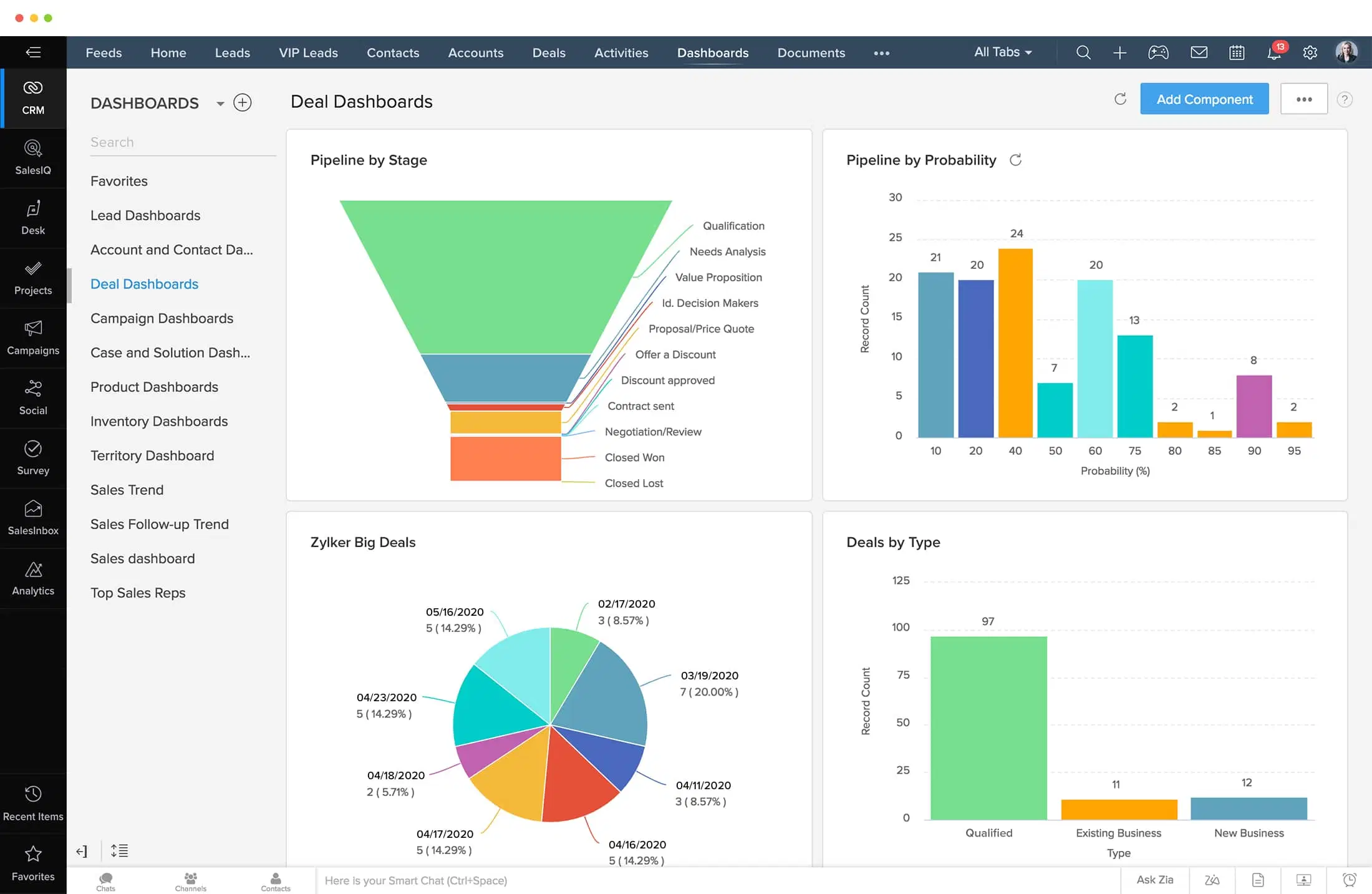
Zoho CRM is a practical option for SMEs that want strong core CRM features with a low-entry pricing option. Its official pricing page includes a free plan for up to three users, and Zoho’s wider ecosystem can be useful for teams that may later need email marketing, finance, helpdesk, or project tools.
For smaller companies, Bigin by Zoho is an even simpler entry point, with paid plans starting at $7 per user per month when billed annually.
Best for in Malaysia: small and midsize businesses that want value, flexibility, and room to grow without a heavy rollout.
Watch out for: as more apps, automations, and custom workflows are added, setup can become less simple than it first appears.
HubSpot Sales Hub
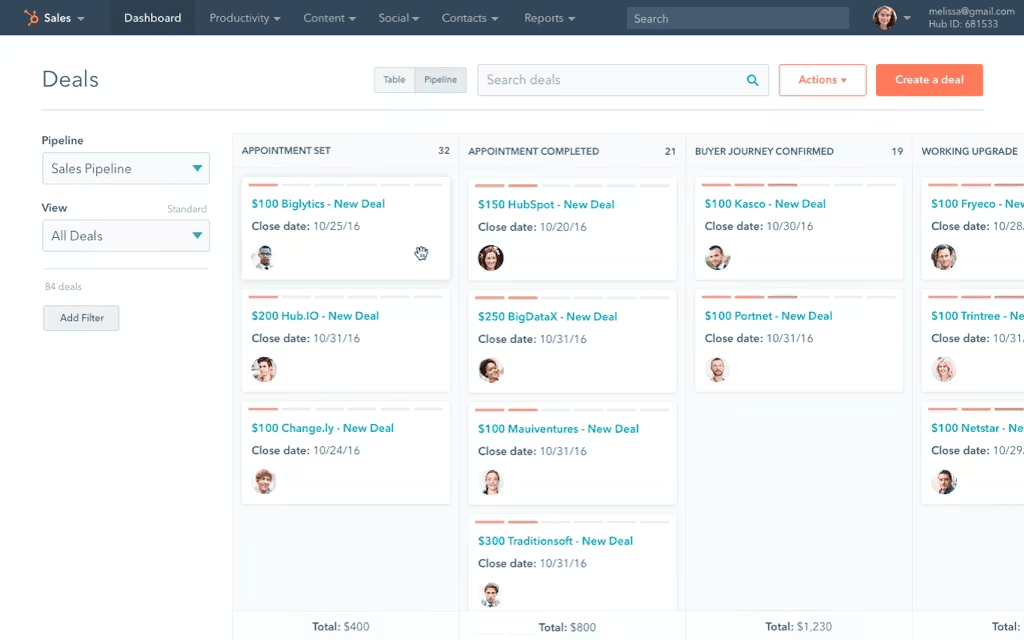
HubSpot is a practical choice for companies that want CRM and marketing to work closely together. It is especially useful for teams that run inbound lead generation, forms, email campaigns, content-driven marketing, and sales follow-up in one connected setup. HubSpot also has a visible partner ecosystem in Malaysia through its official solutions directory, which can help with onboarding and implementation support.
Best for in Malaysia: startups, B2B service firms, and growth-stage teams that care about sales and marketing alignment.
Watch out for: total cost can rise as you add hubs, users, and advanced features. The entry point may look friendly, but serious use often sits above the basic tier.
Microsoft Dynamics 365 Sales
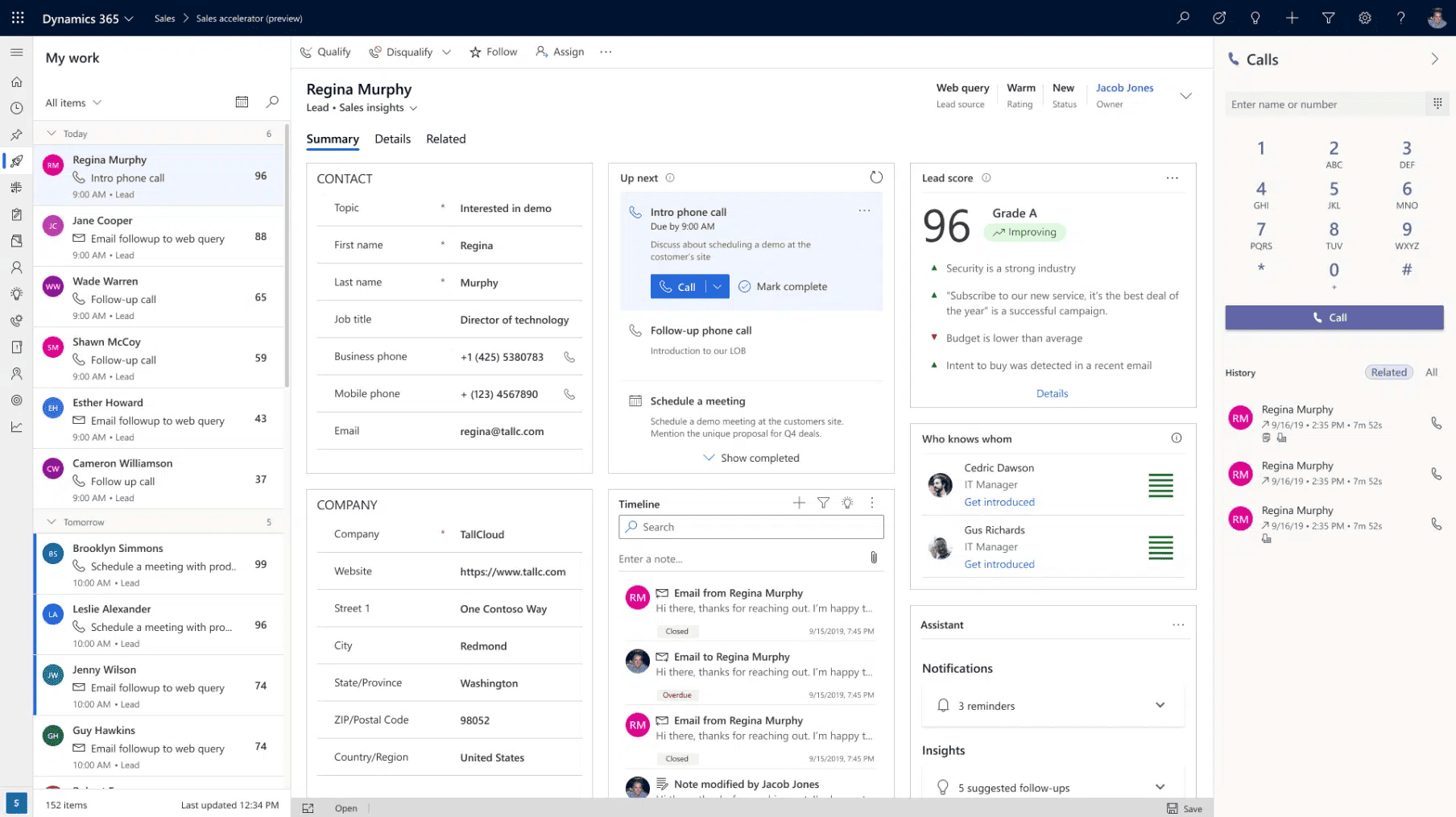
Dynamics 365 Sales is a practical fit for companies that already work inside Microsoft’s ecosystem or expect CRM to connect closely with service, finance, and other business applications. Microsoft’s Malaysia pricing page lists Sales Professional at $65 per user per month, Sales Enterprise at $105, and Sales Premium at $150, all paid yearly.
Best for in Malaysia: larger SMEs, multi-entity businesses, and companies that want a connected CRM and ERP path.
Watch out for: the platform is more demanding than lightweight SME CRMs. It usually needs clearer process design and stronger implementation support. Also, some Microsoft pricing pages note that specific purchase options are not available in every market in the same way.
Salesforce Sales Cloud
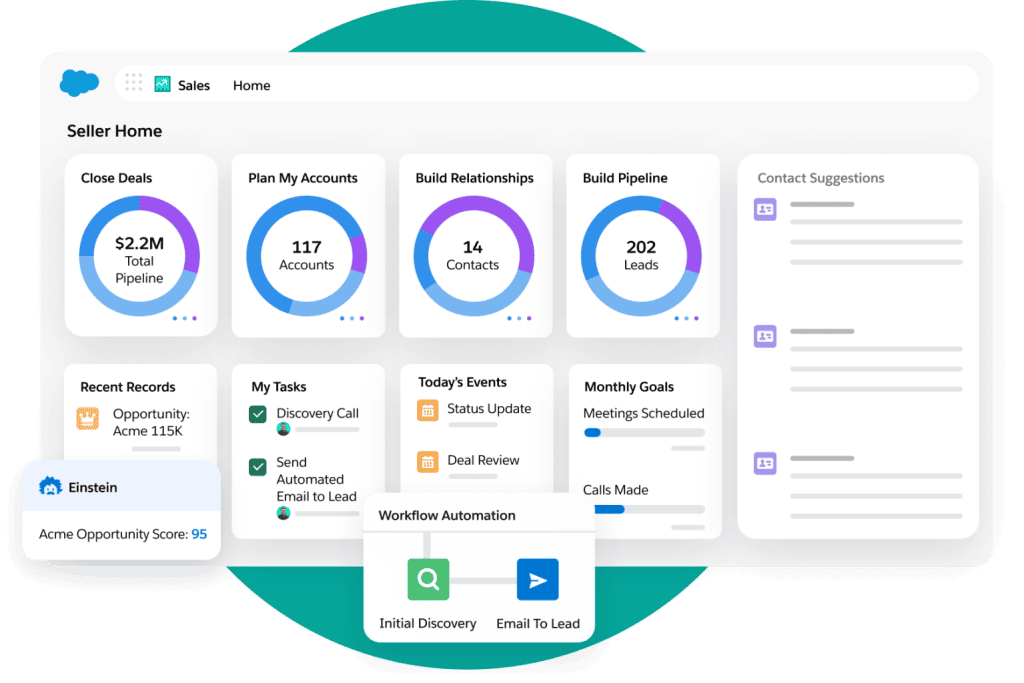
Salesforce is a strong option for businesses with broader sales, service, automation, and reporting needs. Its official pricing starts at $25 per user per month for Starter Suite for small businesses, with higher pricing for broader Sales Cloud and CRM use cases and add-ons. Salesforce is also visibly active in Malaysia, with recent Malaysia-focused startup activity and official customer references including Telekom Malaysia and the University of Nottingham Malaysia.
Best for in Malaysia: companies with complex pipelines, larger teams, or long-term plans for deeper customization.
Watch out for: implementation, administration, and add-on costs can grow fast. This is often too heavy for a very small business that only needs a simple pipeline and contact database.
Freshsales
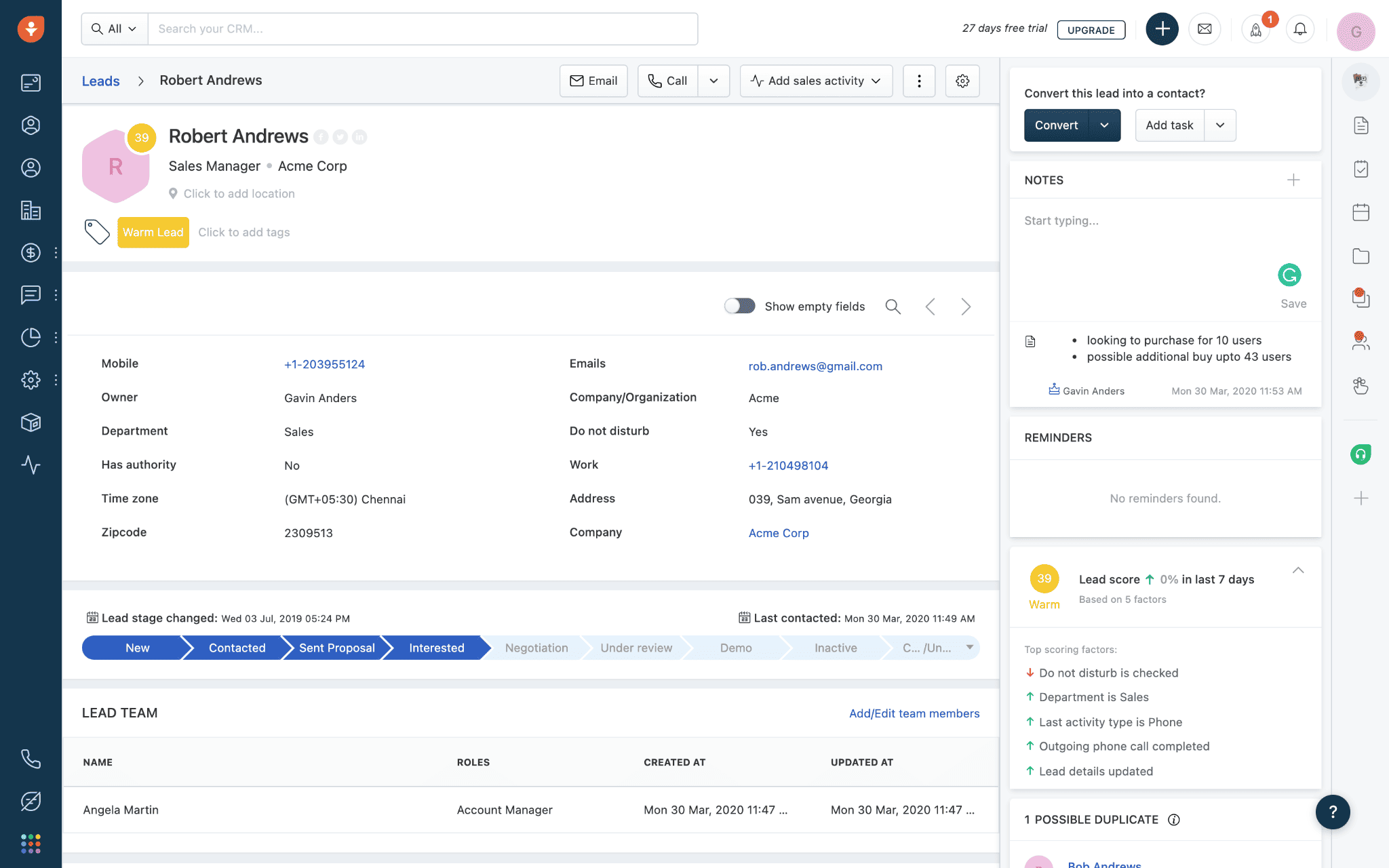
Freshsales is a practical middle-ground option for teams that want sales CRM features, built-in communication tools, and a lighter setup than heavier enterprise platforms. Freshsales offers a free plan for up to three users, and paid pricing starts at $9 per user per month.
Best for in Malaysia: SMEs that want a modern cloud CRM with sales automation and fast deployment.
Watch out for: teams with very deep workflow, analytics, or enterprise integration needs may outgrow the simpler tiers.
Local and regional options worth reviewing
Pepper Cloud CRM
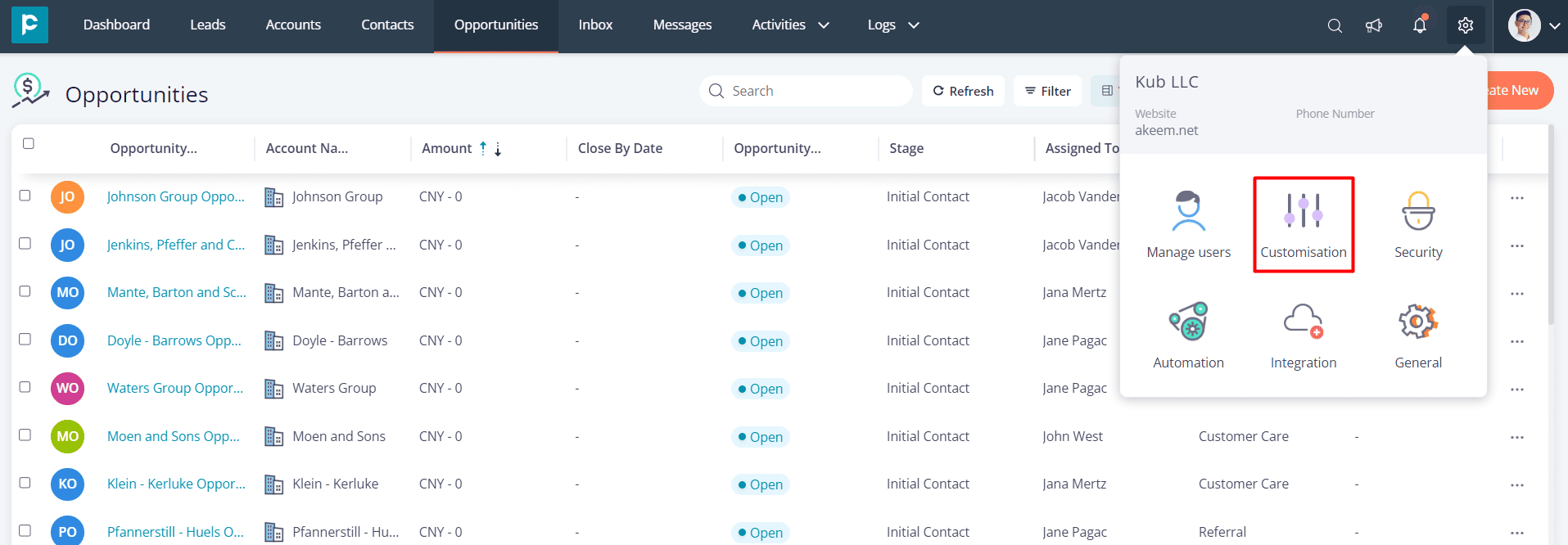
Pepper Cloud is a regional CRM vendor that actively markets to Malaysian businesses. Its Malaysia-facing pages highlight AI-powered automation, WhatsApp integration, omnichannel communication, and localized support for startups, SMEs, and larger businesses. That makes it a relevant option for teams that care about sales automation and chat-driven lead handling.
Best for in Malaysia: SMEs and sales teams that want a CRM built around lead management, automation, and messaging-led communication.
Watch out for: pricing is not clearly published on the pages reviewed, so buyers may need to go through sales to understand total cost and package limits.
Claritas CRM
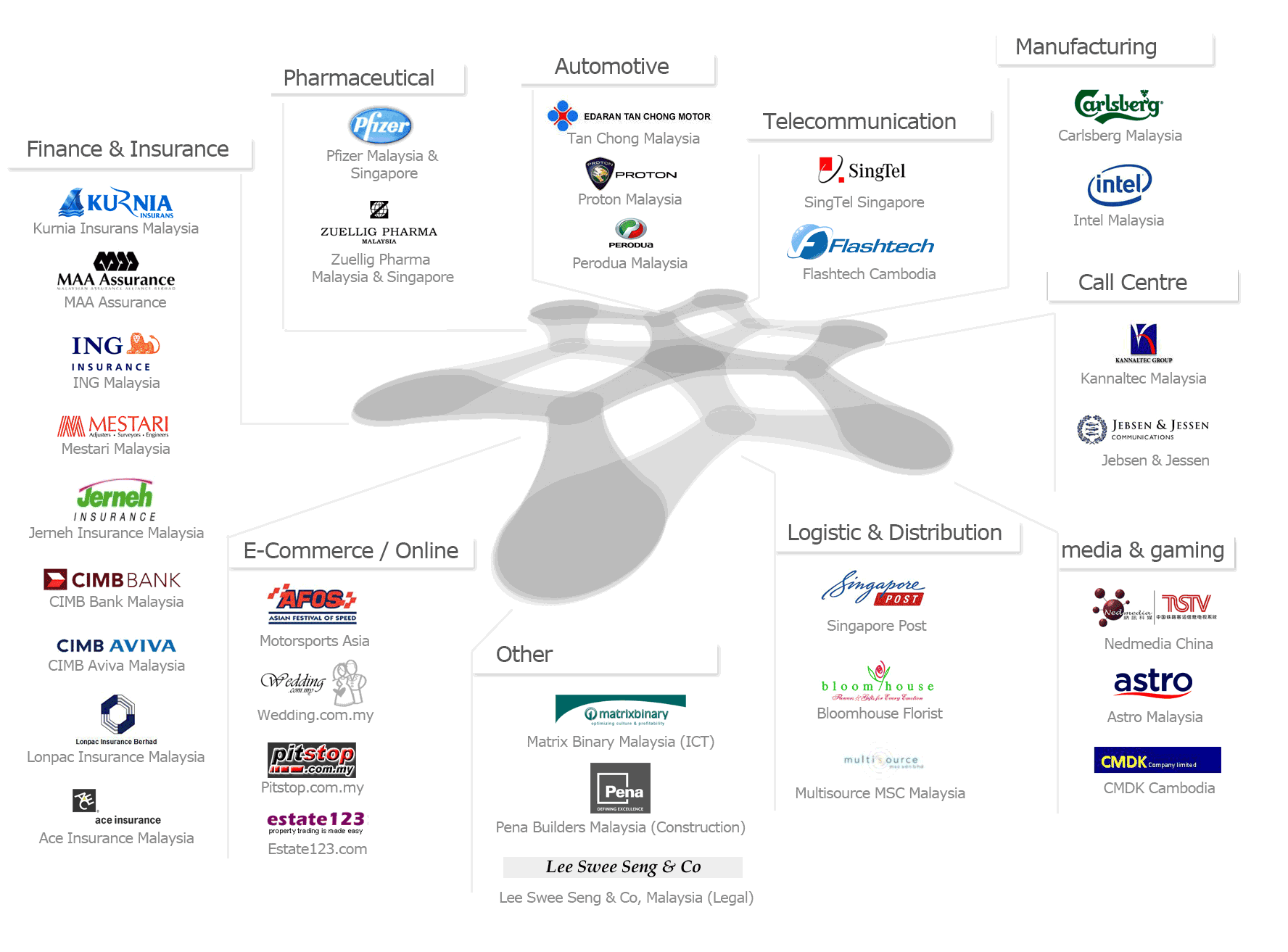
Claritas CRM is a Malaysia-based option that positions itself as a complete CRM solution across marketing, sales, and support. Its site says it is available as both cloud and on-premise, which makes it a relevant option for companies that want deployment flexibility instead of a cloud-only model.
Best for in Malaysia: companies that want a local CRM option with broader customer management coverage and a choice between cloud and on-premise setup.
Watch out for: public pricing is not easy to find, so it is harder to compare upfront cost against more transparent SaaS tools.
TargetCRM
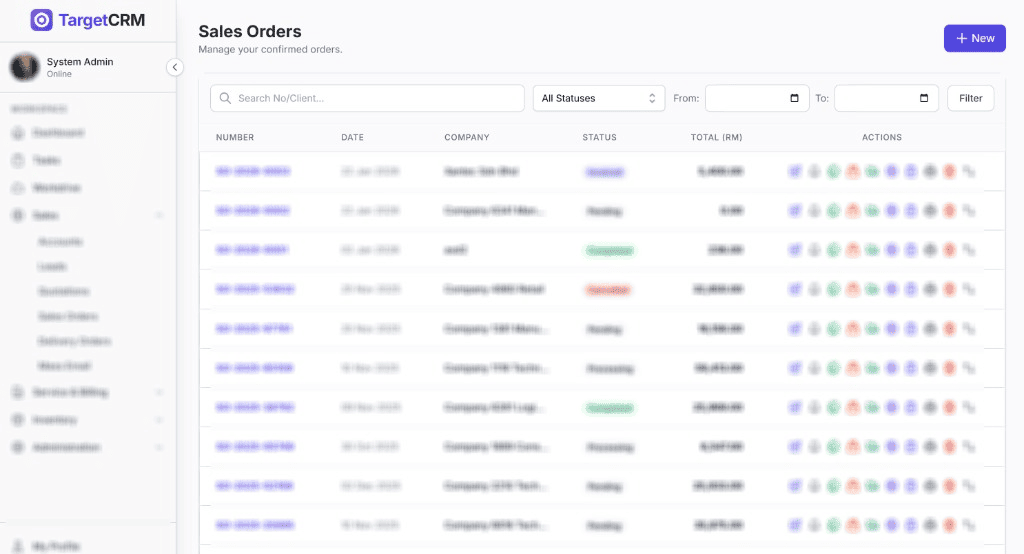
TargetCRM is another Malaysia-focused option. Its site says it has been serving Malaysian SMEs since 2006 and highlights features such as lead management, auto lead distribution, quotation management, sales orders, invoice and billing, dashboard reporting, and integrations with tools such as WhatsApp API, AutoCount, SQL Accounting, Xero, Power BI, email marketing, SMS gateway, and custom APIs. It also emphasizes PDPA-related security messaging and positions itself as built for Malaysian SMEs.
Best for in Malaysia: SMEs that want a local CRM with operational modules, accounting links, and Malaysia-specific positioning.
Watch out for: this is a more locally tailored product, so buyers should test reporting depth, scalability, and admin flexibility against global platforms during the demo stage.
Lark
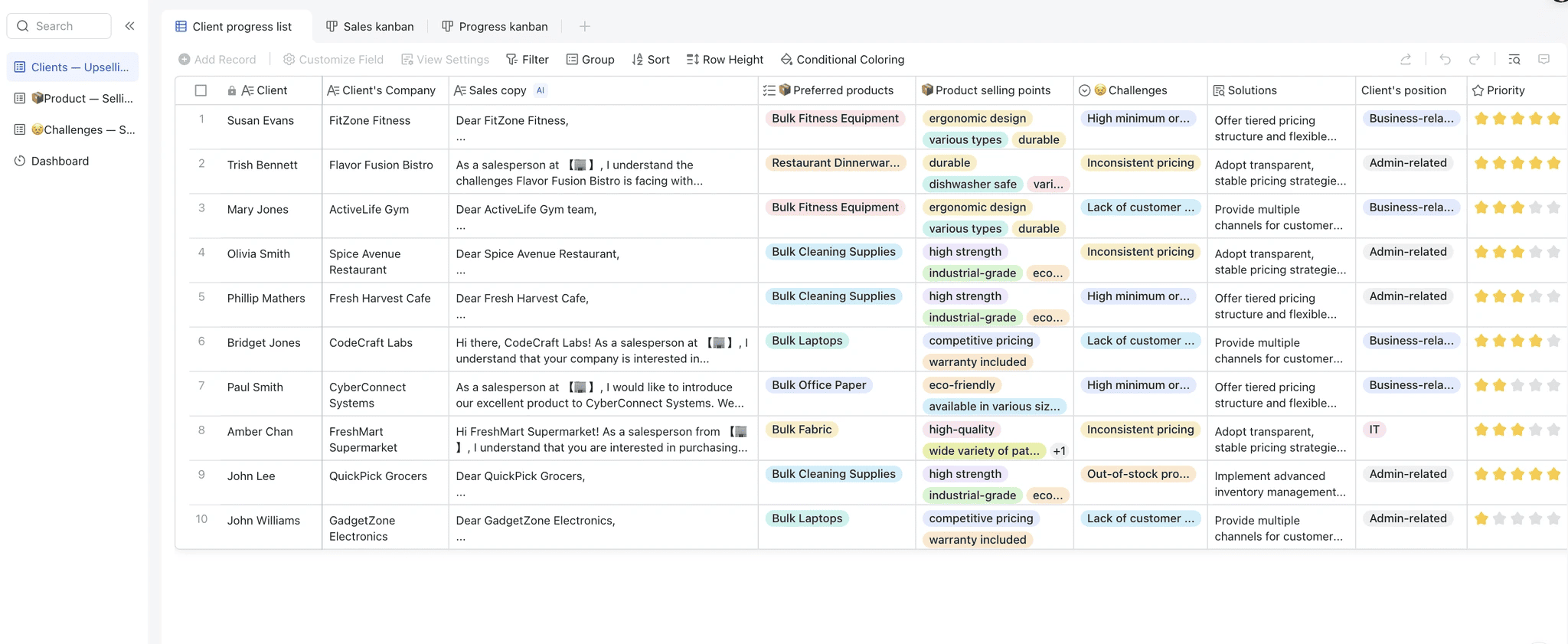
Lark is not a classic standalone CRM vendor in the same way as Zoho, Salesforce, or HubSpot. It is an all-in-one work platform whose Base workflows can support CRM-style processes, business operations, approvals, and process automation. Lark also has official APAC partners in Malaysia, which makes it more relevant for local teams that want a flexible workspace-style platform rather than a traditional sales CRM only.
Best for in Malaysia: teams that want to build lightweight CRM processes inside a wider collaboration and workflow platform.
Watch out for: if you need a mature, dedicated CRM with deeper pipeline management, forecasting, and sales-specific structure out of the box, Lark may need more setup and customization than a purpose-built CRM.
Star CRM
Star CRM is a notable local name to include in a Malaysia-focused CRM article. The company positions itself as a CRM software and services provider in Malaysia and the Asia-Pacific region, with solutions across sales, marketing, loyalty, customer service, outbound work, data, and analytics. Its site also lists a Kuala Lumpur office and a client portfolio that includes major brands.
Best for in Malaysia: businesses that want a local provider or closer region-based support for CRM, loyalty, and customer engagement work.
Watch out for: pricing transparency is lower than on many self-serve global SaaS pages, so buyers will need a demo and a scoped quote to compare total cost properly.
How to compare them in the Malaysian context
A shortlist becomes easier to manage if you compare vendors on five practical questions:
1. Is this tool right for our current size?
A five-person sales team does not need the same CRM depth as a group running sales, service, and multi-country reporting.
2. How hard will setup be?
Zoho, Freshsales, and HubSpot are often easier starting points for SMEs. Dynamics and Salesforce can be stronger long-term systems, but they usually need more planning and admin effort.
3. Do we need local help?
This matters more than many teams expect. HubSpot has an official Malaysia partner marketplace. Star CRM offers direct local presence. For bigger systems, partner quality can shape the whole rollout.
4. Will it connect to the rest of our stack?
If the business also needs inventory, order management, invoicing, or accounting visibility, the CRM should fit into a broader workflow. This is where CRM-only buying can become a trap. A company may solve lead tracking but still keep order and stock data disconnected.
5. What will the system really cost after 12 months?
Do not compare list price only. Include onboarding, migration, admin time, consulting, and paid add-ons. Salesforce, HubSpot, and Dynamics can become much more expensive after expansion. Cheaper systems can also become costly if they need too many workarounds.
A simple buyer view by business type
For a small business or startup, Zoho CRM, Bigin, Freshsales, or HubSpot are usually the easiest places to start. They are faster to test, easier to understand, and less likely to overload a small team.
For a growing SME, the choice often comes down to process style. HubSpot works well for inbound and marketing-led growth. Zoho suits businesses that want a broader app ecosystem. Freshsales works well when speed and simplicity matter. Star CRM is worth a look if local support and customer engagement services matter more than a pure self-serve SaaS model.
For a larger or more complex business, Dynamics 365 and Salesforce are stronger candidates, especially when CRM must connect tightly with finance, service, or enterprise reporting.
Where Kladana fits in
If a Malaysian company needs both customer relationship tracking and operational control, the better setup is often CRM + ERP, not CRM alone. CRM helps capture and manage leads, opportunities, and customer communication. ERP handles inventory, orders, production, purchasing, and invoicing.
Kladana fits into this second part of the stack and can connect with CRM tools, which makes it relevant for companies that want both growth visibility and operational control.
Looking for a CRM for manufacturers, not just a generic sales tool?
Manufacturing businesses need more than contact management and deal tracking. Sales teams also need clear links to stock, production capacity, order status, and delivery planning. Kladana’s CRM for manufacturing helps bring these processes closer together, so your team can manage customer relationships and keep operational work visible at the same time.
Explore Kladana’s CRM for manufacturers and see how it supports sales, production, and inventory in one workflow.
Implementation Best Practices and Pitfalls
Buying CRM software is only the first step. The real value comes from rollout, data quality, user adoption, and integration design. This is where many CRM projects lose momentum.
Start with stakeholder alignment and change management
A CRM rollout should begin with clear agreement on goals. Sales may want better pipeline visibility. Marketing may want cleaner lead handoff. Management may want forecast accuracy. Service teams may want a full customer history.
If these goals are not aligned early, the system often turns into a shared database that nobody fully trusts.
A simple rule works well: define success before setup starts. For example:
- cut lead response time from 24 hours to 4 hours;
- increase follow-up completion rate;
- reduce duplicate contact records;
- improve forecast accuracy.
Clean data before migration
Bad data causes problems fast. Duplicate contacts, outdated phone numbers, inconsistent company names, and missing fields make reporting weak and automation unreliable.
Before importing into a new CRM, clean:
- duplicate records,
- old leads with no owner,
- inconsistent pipeline stages,
- free-text fields that should become dropdowns,
- missing country, source, or account details.
Keep integration architecture simple at first
Many teams try to connect everything at once: CRM, ERP, forms, email, telephony, marketing automation, support, and accounting. That creates risk.
A better rollout starts with the core flow:
- capture lead,
- qualify lead,
- manage opportunity,
- hand off won deal to fulfillment or finance.
After that, add more integrations in stages.
Train users by role, not with one generic session
A sales rep, a manager, and an admin do not use CRM in the same way. One training deck for everyone usually fails.
Good rollout training should be split by role:
- sales users: contacts, deals, tasks, follow-ups;
- managers: dashboards, forecasts, pipeline reviews;
- admins: fields, permissions, automation, imports.
The practical takeaway is simple: train people on the screens and actions they use every day.
Use a pilot before full go-live
A pilot rollout helps catch weak field design, broken automation, poor permissions, and reporting gaps before the whole company is affected.
This can be a single team, one market, or one business unit. The point is to test real workflows with real users.
Plan post-launch support
Go-live is not the finish line. In the first weeks after launch, users often raise the same issues:
- “Which stage should I use?”
- “Why did this lead not assign correctly?”
- “Why is this report wrong?”
- “Which fields are required?”
That is normal. The mistake is treating those questions as user resistance instead of support needs.
A good post-launch plan includes:
- one internal owner,
- weekly issue review,
- small workflow fixes,
- report validation,
- refresher training after 2 to 4 weeks.
Common CRM rollout mistakes
These are the most common problems to call out in the article:
❌ Buying too much system too early
A small team does not need enterprise complexity on day one.
❌ Migrating messy data
A new CRM will not fix poor data by itself. It may only make the mess more visible.
❌ Automating broken processes
If the lead flow is unclear offline, adding automation will not solve it.
❌ Ignoring integration design
A CRM that does not connect well to ERP, invoicing, or support tools often creates rework.
❌ Weak adoption planning
Users do not adopt CRM because leadership says so. They adopt it when the process is clear and the system helps them do daily work faster.
What good implementation looks like
A strong CRM rollout in Malaysia usually has these traits:
- one clear business owner,
- a small, agreed field structure,
- cleaned data before import,
- limited but useful integrations,
- role-based training,
- pilot before scale,
- KPI review after launch,
- privacy and access controls checked against company policy and PDPA expectations in Malaysia.
ROI and Business Justification for CRM in Malaysia
CRM software should not be justified as “good technology.” It should be justified as a business investment. That means estimating both cost and value before rollout starts.
Main cost drivers
The full cost of CRM usually includes more than licenses. Buyers in Malaysia should budget for:
- user subscriptions,
- onboarding or implementation fees,
- data migration,
- training,
- integrations,
- customization,
- admin or partner support,
- future upgrades or added modules.
This matters because vendor list prices often show only the starting point. For example, Microsoft lists Dynamics 365 Sales Professional at $65 per user per month, Sales Enterprise at $105, and Sales Premium at $150, while HubSpot and Salesforce also scale up quickly as more users, hubs, or advanced features are added.
Main benefit levers
The value side usually comes from four areas:
🎯 More sales won
Better lead follow-up, faster response, and cleaner pipeline management can raise conversion rates.
🎯 More productive teams
A good CRM helps teams work faster by automating routine tasks, organizing customer records, and making the next action clear. This reduces admin work and improves daily efficiency.
🎯 Better retention and service
CRM helps keep customer history visible, which improves follow-up and reduces handoff mistakes.
🎯 Better management decisions
A CRM dashboard gives managers clearer visibility into pipeline health, rep activity, and forecast quality. That is harder to measure directly in cash terms, but it often improves planning and reduces missed deals.
Simple ROI example in MYR
Here is a basic example for a Malaysian SME sales team.
Assume a company has:
- 5 CRM users,
- CRM subscription and support cost of MYR 1,200 per month,
- one-time setup and training cost of MYR 12,000.
That makes first-year cost about:
MYR 1,200 × 12 = MYR 14,400
MYR 14,400 + MYR 12,000 = MYR 26,400
Now assume the CRM helps the company:
- win just 2 extra deals per month,
- average gross contribution per deal = MYR 2,000.
That means:
2 × MYR 2,000 × 12 = MYR 48,000 in annual gross contribution
In that simple case, the payback is already positive in year one:
MYR 48,000 − MYR 26,400 = MYR 21,600
This example is only illustrative, but it shows the right way to think about CRM ROI. Buyers should compare the cost of the system against extra revenue, time saved, lower admin effort, and better retention.
What a realistic CRM business case should include
A short internal business case should answer five questions:
- What sales or service problem are we fixing?
- What metrics should improve?
- What will the full first-year cost be?
- How long should payback take?
- What systems must connect for the CRM to create value?
If those points are clear, the CRM decision becomes easier to defend.
Buyer’s Roadmap and Next Steps
A CRM project goes better when buyers follow a short decision path instead of jumping from demos straight into purchase.
Step 1. Define the problem before shortlisting vendors
Start with the real business issue:
- leads are missed;
- follow-ups are inconsistent;
- managers cannot trust the pipeline;
- customer history is scattered;
- sales and operations work in separate systems.
This matters because the “best CRM” depends on the problem you are solving. A simple sales team may need only pipeline visibility. A growing company may need CRM plus marketing automation. A distributor or manufacturer may need CRM tightly connected to ERP.
Step 2. Build a shortlist with fit, not hype
A shortlist of 3 to 5 vendors is usually enough.
Use filters such as:
- team size fit,
- Malaysia support or partner presence,
- English and Malay usability,
- mobile quality,
- integration options,
- price transparency,
- rollout complexity.
Step 3. Use a simple RFP or vendor scorecard
Buyers do not need a long enterprise procurement document. A short scorecard is often enough.
Score each vendor on:
- core CRM features,
- ease of setup,
- reporting,
- automation,
- integration with ERP and accounting,
- local support,
- total first-year cost,
- scalability.
That makes demos easier to compare because every vendor tends to look strong in a live presentation.
Step 4. Check integration readiness early
Before choosing a CRM, map the systems it must connect to:
- ERP or inventory platform,
- accounting software,
- mail and calendar,
- telephony or chat tools,
- website forms,
- e-commerce,
- support software.
This step is one of the most important in a Malaysian SME environment, where teams often grow from spreadsheets into a mixed stack of separate tools. If the CRM cannot support the real data flow, adoption will slow down.
Step 5. Run a pilot and measure the right KPIs
Do not judge CRM success by login count alone. Use business KPIs such as:
- lead response time,
- follow-up completion rate,
- pipeline conversion rate,
- average sales cycle length,
- repeat sales or retention,
- forecast accuracy.
A pilot with one team or one business unit helps prove whether the CRM actually improves these numbers before wider rollout.
Step 6. Plan for scale, not only launch
After go-live, the work is not finished. The roadmap should include:
- monthly cleanup of data quality,
- review of dashboard usefulness,
- adjustment of automations,
- user training refreshers,
- new integrations only after the core process is stable.
This helps the CRM stay useful as the company grows.
A simple next step for Malaysian buyers
For many Malaysian businesses, the smartest next step is not “buy the most famous CRM.” It is:
- define the sales and customer process;
- shortlist tools that fit local and operational needs;
- test them against real workflows;
- make sure the CRM can work with ERP, accounting, and support systems.
That is the point where a CRM project starts to create business value, not only software spend.
Frequently Asked Questions on Top CRM Software in Malaysia
Choosing CRM software in Malaysia usually brings up the same questions: cost, rollout time, integrations, and local fit. Here are short answers to the points buyers ask most often.
What is CRM software and why use it for Malaysian businesses?
CRM software helps businesses manage leads, contacts, opportunities, customer communication, and follow-ups in one system. For Malaysian businesses, it is useful because it reduces manual work, improves visibility, and supports mobile and digital customer interaction. Malaysia’s high internet and mobile usage make cloud CRM especially relevant.
How is CRM different from ERP or marketing automation?
CRM focuses on customer relationships, sales pipelines, and account history. ERP manages operations such as inventory, purchasing, production, and invoicing.
Marketing automation handles campaigns, segmentation, and lead nurturing. Many growing businesses need more than one of these tools working together.
What deployment model is best in Malaysia?
For most SMEs, cloud CRM is the easiest choice because it supports mobile access, faster rollout, and lower infrastructure effort. Hybrid or on-premise models may fit companies with stricter internal or sector requirements.
Which CRM vendors support Malaysia?
Commonly shortlisted options include Zoho CRM, HubSpot, Freshsales, Microsoft Dynamics 365, Salesforce, and local providers.
What does CRM software usually cost in Malaysia?
Cost depends on users, features, support, implementation, and integrations. Buyers should compare total first-year cost, not just the monthly subscription price. A low entry price can rise if setup, training, or add-ons are heavy.
How long does CRM implementation take?
A simple CRM rollout for a small team may take a few weeks. A more complex rollout with integrations, custom fields, migration, and multi-team adoption can take several months. The timeline depends more on process clarity and data quality than on the software alone.
What are the most common CRM adoption problems?
The most common problems are poor data, unclear processes, weak integration planning, and low user buy-in. These issues usually cause more trouble than missing features.
How does CRM connect with ERP, email, telephony, and support tools?
Most modern CRMs offer connectors, APIs, or integration platforms. The key is mapping what data should move between systems. For many SMEs, CRM should manage leads and customer communication, while ERP manages orders, stock, and invoicing.
What CRM trends should Malaysian businesses watch?
The most useful trends are AI-assisted selling, predictive insights, conversational CRM, mobile-first workflows, and low-code customization.
List of Resources
- Grand View Research — Malaysia Software As A Service (saas) Market Size & Outlook
- Astute Analytica — South East Asia CRM (Customer Relationship Management Software) Market
- Invest Malaysia — Malaysian Personal Data Protection Act