Normal Cargo
Packaged goods, FMCG, textiles, electronics — anything fitting standard transport dimensions
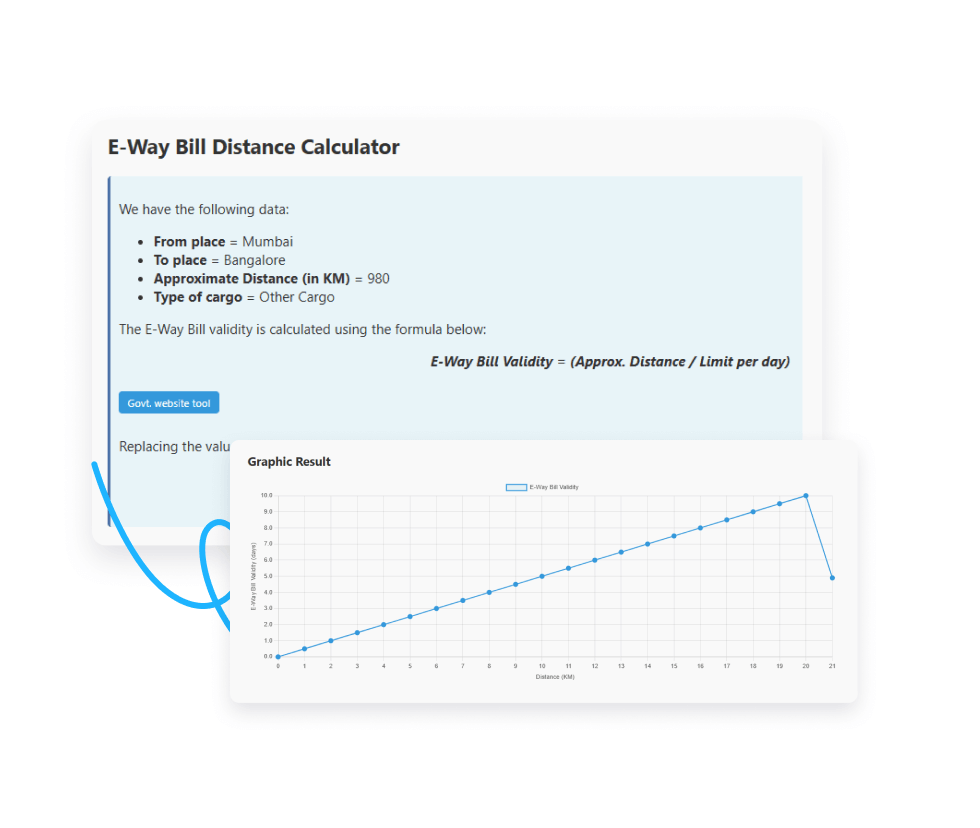
We have the following data:
The E-Way Bill validity is calculated using the formula below:
Replacing the values we have:
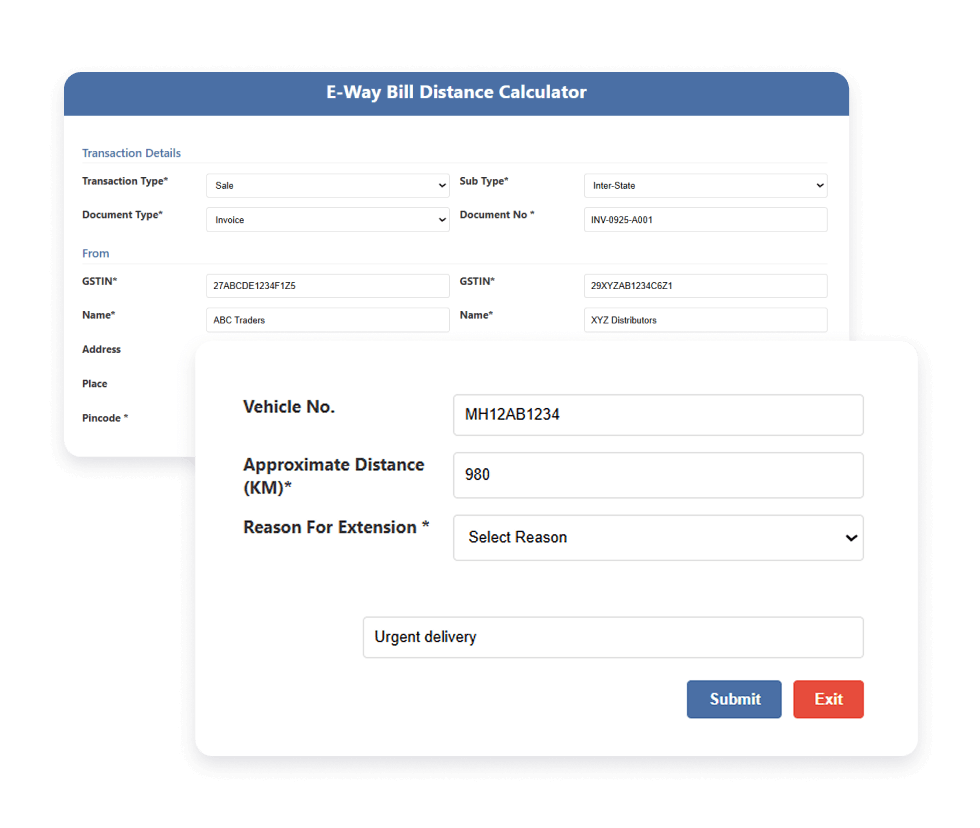
1. Select transaction type, subtype, and document type
2. Enter document number, GSTINs of consignor and consignee
3. Fill in addresses, places, states, and pincode
4. Provide transportation details:
5. Enter the approximate distance (in KM)
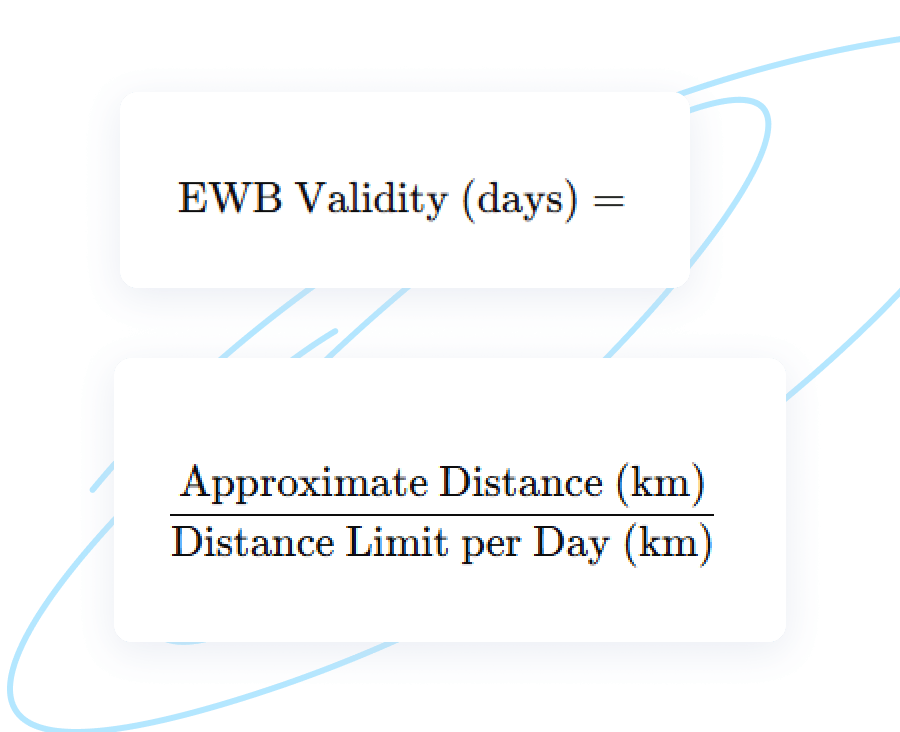
The tool automatically applies the official formula:
Validity = Distance ÷ Limit per Day
For other cargo: 200 km/day
In this case:
980 ÷ 200 = 4.9 days of E‑Way Bill validity.
Use Reset to start over
Don’t just track distance — track every dollar. With Kladana, you get full financial visibility across sales, purchases, stock, and money movement.
Start with our forever free plan or explore all features with a 14‑day trial.

An E‑Way Bill is an electronically generated document required under GST for transporting goods worth over ₹50,000 across state or within a state.
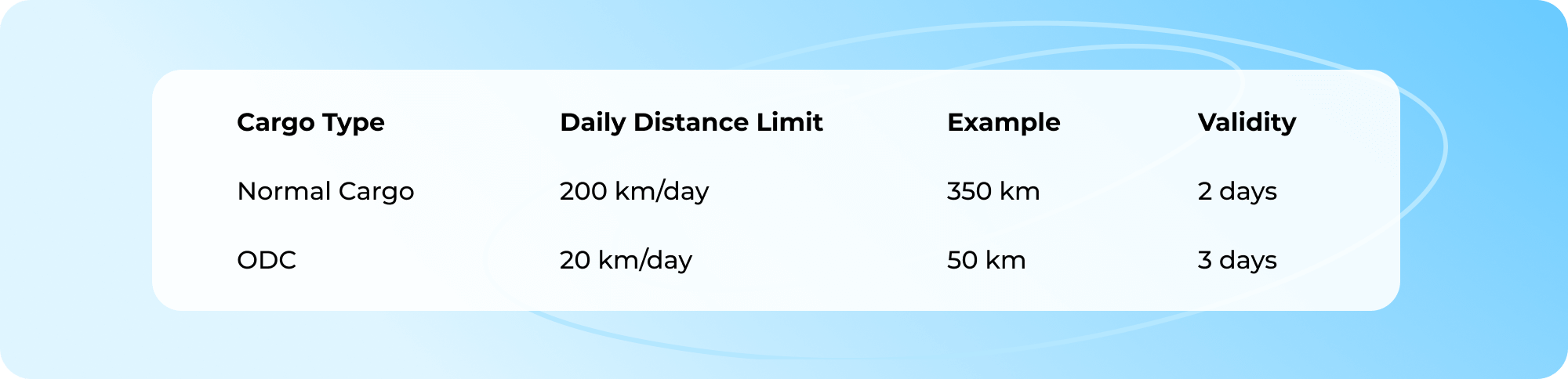
The validity depends on distance and cargo type:
The calculator applies this rule automatically.
Yes. It applies to road, rail, air, and ship transport within India.
Yes. Before expiry, citing valid reasons like:
ODC stands for Over‑Dimensional Cargo — if your goods exceed the legal dimensions of the vehicle (e.g. machinery, beams), they fall under ODC. You’ll need special permissions and the validity will be shorter (20 km/day).
Your consignment becomes non‑compliant under GST. It can be detained by tax authorities and may incur penalties. Always plan ahead or request an extension in time.
Yes. Each movement of goods — whether for return, job work, or stock transfer — requires its own valid E‑Way Bill.
Learn how to arrange business routines for manufacturing, wholesale, retail & e‑commerce