
Eight years ago, Fedor Borisov was a plumbing installer storing extra parts in three garages. Today, he runs four plumbing supply stores with an annual turnover of about $630,000. His business sells everything from small repair items to pumps, water heaters, radiators, bathtubs, toilets, and professional installation materials.
The company faces the same challenge as many retail businesses with technical products: demand changes by season, customers need expert advice, and the assortment is too large to manage by memory. To keep stock under control, Fedor uses Kladana to analyze sales, plan purchases, maintain detailed product cards, and avoid turning slow-moving items into dead stock.
- From Plumbing Installer to Store Owner
- Four Stores, Three Retail Formats
- The Business Economics: High Turnover, Thin Safety Margin
- Seasonality Is the Main Planning Challenge
- How Kladana Helps with Purchasing Decisions
- Detailed Product Cards Support Better Sales Decisions
- Competing with Marketplaces Through Expertise
- A Small Team with Many Responsibilities
- Why the Owner Still Stays Close to Daily Operations
- Results with Kladana
- Still Managing Retail Stock in Spreadsheets?
From Plumbing Installer to Store Owner
Fedor entered the plumbing trade after the ninth grade, when he started working as an assistant on construction sites. Over time, he moved from basic installation jobs to managing teams and complex renovation projects.
Plumbing became my main specialization because it felt practical and technical at the same time. Every project required the right mix of pipes, fittings, pumps, valves, tools, and replacement parts. As I worked with more clients, I started keeping materials for future jobs. First, the stock fit into one garage. Then it filled two. When the third garage became full, I understood that this informal setup had reached its limit.

The opportunity to open a store came in 2016, when a local plumbing shop closed. Its owner managed the business from another town, stock records were kept on paper, and popular items often ran out. Fedor knew the location and the customers, so he rented the space, bought a basic computer for stock tracking, prepaid two months of rent, and purchased the first batch of goods for about $8,400.
The previous tenant had already renovated the premises, so the new business started with a clean room, a fresh assortment, and a new team.
Four Stores, Three Retail Formats
Today, Fedor manages four stores, and each location has its own role.
Store #1: A Mini-Hypermarket for Home Repair
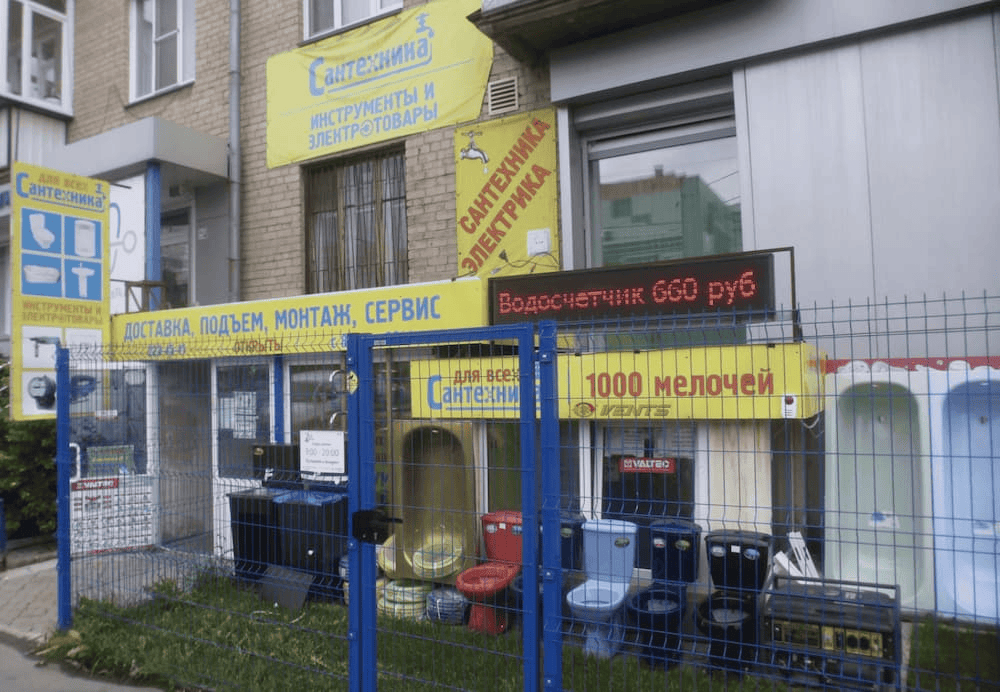
The first store became the flagship. It occupies 126 m² in a residential district, away from large chain competitors. The store generates around $77,000 in monthly turnover and about $14,000 in monthly income.
Its assortment covers everyday repair needs and larger renovation projects: paint, hammers, drills, bathtubs, toilets, pipes, construction mixes, and professional tools. Customers can buy both a single small part and a full set of materials for home repair.
Store #2: Engineering Plumbing Systems
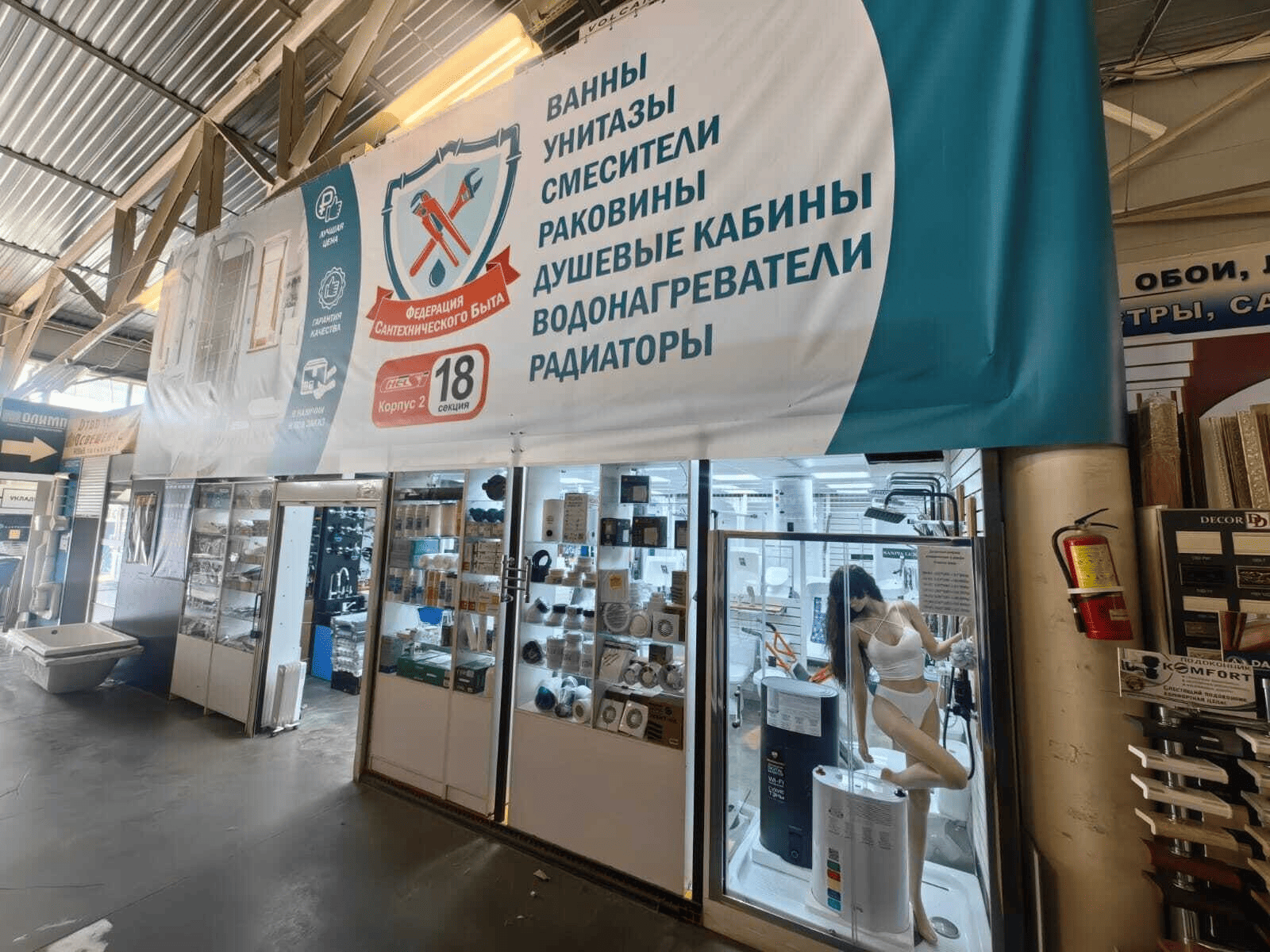
The second store opened in 2020 in a shopping center. One week after launch, the center closed because of quarantine restrictions, and the store had to stop operating for a month. A loan restructuring helped the business survive the first shock.
This location focuses on engineering plumbing: water heaters, radiators, pumps, and pipes. The team also became an official representative of a pump manufacturer and keeps the full product range in stock.
The main challenge here is seasonality. In summer, customers buy pump equipment for country houses, and monthly turnover can reach about $49,000. In February, turnover can fall to about $5,600.
Stores #3 and #4: Bathroom Fixtures

In 2023–2024, Fedor opened two smaller stores of 50–70 m² each. They sell bathroom fixtures: bathtubs, faucets, toilets, and shower cabins. The company also became an official regional representative of a bathtub manufacturer.
One of these stores has reached break-even, while the other brings a modest but stable annual profit of about $7,000.
The Business Economics: High Turnover, Thin Safety Margin
Across all stores, annual turnover is about $630,000, with average monthly turnover around $46,000. Business profitability is around 30–35%, while monthly net profit ranges from $1,500 to $3,800.
The numbers look solid, but the business is not easy to run. During the low season, Fedor sometimes has to cover rent and salaries from his own funds. During the high season, he saves money for future purchases or reinvests it into development.
Seasonal purchasing also creates pressure on working capital. In winter, suppliers offer discounts, so Fedor buys stock in advance. This helps him prepare for spring and summer demand, but it also means taking working-capital loans and paying interest. The discount has to be large enough to cover those additional costs.
Unexpected events can be even more dangerous. In 2023, the first store was flooded. The company had to throw away damaged goods worth about $28,000 and then restock the assortment for about $49,000 at new prices.
Seasonality Is the Main Planning Challenge
Plumbing retail depends heavily on weather and renovation cycles.
Pump stations for summer houses sell best from April to August. Circulation pumps for heating systems are in demand in autumn and winter. Drainage pumps sell better after rainy periods. Bathroom fixtures see a sharp rise in demand during the summer renovation season.
In a warm winter, heaters may not sell at all. In February, when our total monthly turnover can fall to around $7,000, I may still purchase about $70,000 worth of goods because suppliers offer strong off-season discounts. The stock then stays in the warehouse until demand returns in spring.
This model only works when purchasing decisions are based on real sales data. Otherwise, discounted stock can easily become dead stock.
How Kladana Helps with Purchasing Decisions
Kladana helps the team analyze sales and understand what should be ordered again and what should not. The system shows which items are likely to sell and which products may stay on the shelf for too long.
This matters because the company keeps around 15,000 product names in its stock records. The assortment includes basic high-demand products, technical components, rare items, and new products that the team tests before deciding whether to keep them.
The core assortment consists of proven items with stable demand. These products are reordered based on sales analysis. At the same time, the team tests new products and removes items that lose relevance. For example, some pipe sizes that were common in the past are now rarely used in modern systems.
For a business with a wide assortment, purchase planning cannot depend only on the owner’s memory or a salesperson’s experience. Kladana gives the team a structured view of sales, stock levels, and product performance.
📚 Recommended Reads
Explore more Kladana customer stories to see how small and mid-sized businesses manage inventory, production, sales, and everyday operations with one cloud ERP.
- BodyMotion: How a medical apparel brand manages stock, production, and online orders with Kladana
Read the Story - Neytt Homes: How a home textile business keeps production and inventory under control
Read the Story - J’tronix: How an electronics retailer improved stock visibility and order management
Read the Story - Cura Pharmaceuticals: How a pharmaceutical manufacturer manages production, inventory, and compliance workflows
Read the Story
Detailed Product Cards Support Better Sales Decisions
Customers often come to the store with a broken part and only a rough explanation of what they need. For example, someone may ask for a toilet seat cover without knowing the exact model.
The salesperson needs to identify the right replacement by asking for measurements: the distance between mounting bolts, length, width, and shape. Sometimes the customer makes a cardboard template from the old part so the team can find the closest match.
To support this work, the company keeps detailed product cards in Kladana. These cards include:
- several price types to control profitability;
- links to similar products from competitors;
- supplier contacts for quick purchase checks.
When a customer says that a competitor offers a lower price, the salesperson can quickly check the product card. The team sees the supplier cost, competitor price, and current retail price in one place. This helps them decide whether to offer a discount or explain why the company’s price is higher.
This approach helps protect margin without slowing down customer service.
Competing with Marketplaces Through Expertise
Marketplace prices can be difficult to match. Large sellers sometimes offer plumbing products at prices below the store’s purchase cost because they can afford to sacrifice margin for turnover.
Fedor does not try to compete only on price. Instead, the stores focus on what marketplaces cannot provide: expert advice, full-system selection, installation support, and after-sales service.
When a customer buys a pump for a well, the team explains which automation is needed, which pipes to choose, and how deep the system should be installed. A marketplace can sell the pump, but it cannot help the customer build a working system from compatible parts.
The company also works with trusted installation teams. If a warranty issue appears later, Fedor personally helps organize delivery to the service center, documents, and repair control.
For large orders, the team can offer flexible discounts while keeping the sale profitable. For example, when a customer buys a full well system with a pump, pipes, automation, and fittings, the total price can become close to marketplace pricing. The customer also saves time and avoids mistakes in product selection.
A Small Team with Many Responsibilities
The company has eight employees across four stores. Each location usually has two sales consultants working on a rotating schedule. Most employees have stayed with the business for three to five years.
Each person performs several tasks: consulting customers, working with the cash register, managing customer records, and helping with everyday store operations.
Hiring remains difficult. Job ads bring few responses, and in the high season staff shortages can lead to queues. Competing with courier services on salary is hard, so the company uses bonuses and extra pay for weekends and holidays.
The average salary in the team is about $845 per month. The motivation system is transparent: employees earn a percentage of sales. The more they sell, the more they earn.
Why the Owner Still Stays Close to Daily Operations

Even with four stores, Fedor remains deeply involved in day-to-day work. When there are not enough people, he can stand at the cash register, serve customers, pack goods, load plumbing items into a vehicle, or deliver an order himself.
He also handles key supplier negotiations. Twice a year, he visits major industry exhibitions to find direct contacts with manufacturers and negotiate better terms.
Warranty cases also stay under his control. If a customer’s water heater fails after a year, Fedor can personally collect it, take it to the service center, prepare documents, and monitor the repair.
The workload is high, but Fedor sees value in running his own business. It gives him control over every process, visibility into every cost, and the ability to solve real customer problems.
Results with Kladana
Kladana gives the business a clearer way to manage a complex retail operation with seasonal demand and a large technical assortment.
| Area | Before | With Kladana |
Purchasing |
Decisions depended heavily on experience and manual checks |
Sales analysis helps identify what to reorder and what to avoid |
Stock control |
Large assortment was difficult to manage across stores |
Around 15,000 SKUs are structured in one system |
Pricing |
Competitor and supplier data were harder to compare quickly |
Product cards store price types, competitor links, and supplier contacts |
Seasonality |
Off-season purchasing created a risk of dead stock |
Purchase planning is based on actual demand patterns |
Customer service |
Sales depended on staff expertise and memory |
Detailed product data helps find compatible items faster |
Still Managing Retail Stock in Spreadsheets?
For plumbing, hardware, home improvement, and technical retail, stock control is not only about counting items. You need to know which products sell by season, which items should be reordered, which products risk becoming dead stock, and how every discount affects your margin.
Kladana helps teams:
- manage thousands of SKUs in one system;
- track stock across several stores and warehouses;
- create detailed product cards with prices, suppliers, and notes;
- plan purchases based on sales data;
- control margin before offering discounts;
- keep sales, purchasing, stock, and customer records connected.
Start your 14-day free trial and see how Kladana can help you manage inventory, purchasing, and sales in one cloud ERP.