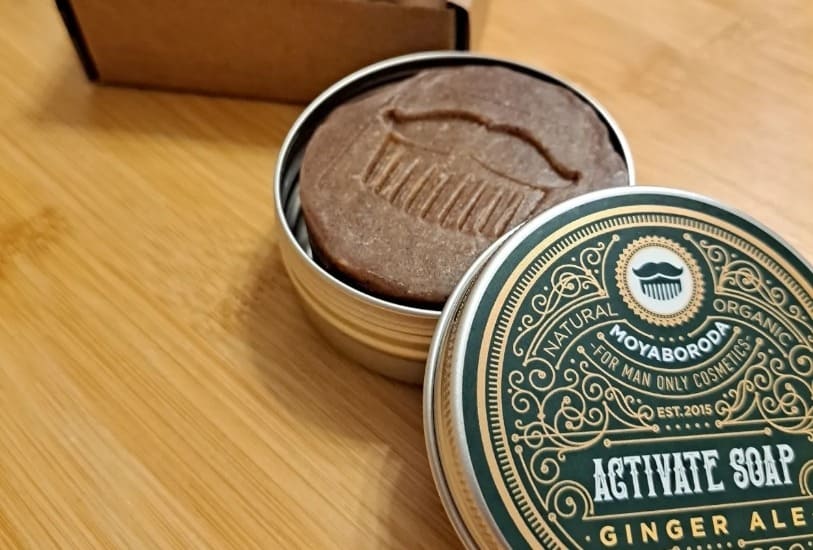
MOYABORODA and OLFACTORIUS produce natural personal care products in small batches. Their catalogue contains about 100 SKUs, while the team has only seven people, including the two founders.
The business uses Kladana to connect formulas with inventory, purchasing, production, and costing. This helps the team find missing ingredients before work begins, calculate the cost of each batch, and keep slow-moving products out of external warehouses where they could expire.
- At a Glance
- How a Home Experiment Became Two Personal Care Brands
- Why Small-Batch Cosmetics Are Hard to Plan
- How Kladana Connects Formulas, Inventory, and Purchasing
- Why the Company Does Not Produce Larger Batches
- Why Marketplace Fulfillment Did Not Fit Every Product
- How the Manufacturer Protects Its Margin
- Cloud Access Keeps the Owner Close to Daily Operations
- A Small Business by Choice
- Lifehacks for Other Small Manufacturers
- To Sum It Up
At a Glance
| Company fact | Details |
Industry |
Natural cosmetics and personal care manufacturing |
Brands |
MOYABORODA and OLFACTORIUS |
Team |
7 people, including the founders |
Product range |
About 100 SKUs |
Production space |
100 m² / 1,076 sq ft |
Typical batch size |
50 soap bars or 5–10 litres of oil |
Most complex formula |
26 ingredients |
Main sales channel |
Third-party marketplaces, about 90% of sales |
Monthly revenue |
Approximately $6,400–$11,600 |
Reported profit margin |
About 24–25% |
How a Home Experiment Became Two Personal Care Brands
Founder Sergey Savelyev had spent years in sales, but he wanted to create a physical product that he could follow through every stage. The idea took shape during a trip to Italy, where he and his wife saw how small family businesses used handmade products to create a strong customer experience.
When they returned home, they began to experiment with soap in their kitchen. Positive feedback from friends encouraged them to develop more products.

In 2015, we launched MOYABORODA, a men’s grooming brand. OLFACTORIUS, a women’s personal care brand, grew alongside it. Their catalogues now include soap, beard oils, waxes, balms, creams, and hair-care products.
The founders built the company without outside investment, a franchise, or business loans. They invested less than approximately $13,000 in production equipment over time. Their facility looks closer to a well-equipped artisan workshop than a mass-production factory.
That setup is intentional. A larger reactor or an automated filling line could produce more units, but it would also create more stock than the business could sell before some products reach their expiry dates.
Why Small-Batch Cosmetics Are Hard to Plan
Small production volume does not mean simple production. The two brands manage about 100 SKUs with different formulas, ingredients, sales patterns, and shelf lives. Some products sell every week, while others sell only once every few months or during holiday campaigns.
The team therefore makes soap in batches of about 50 bars and mixes oils in batches of 5–10 litres. These quantities help the company keep products fresh and adjust its production plan to actual demand.
One of its most complex soaps contains 26 ingredients. A regular formula may contain only six to eight. The production process takes about five hours and includes several heating and mixing cycles before the product can cool, mature, and move to packaging.
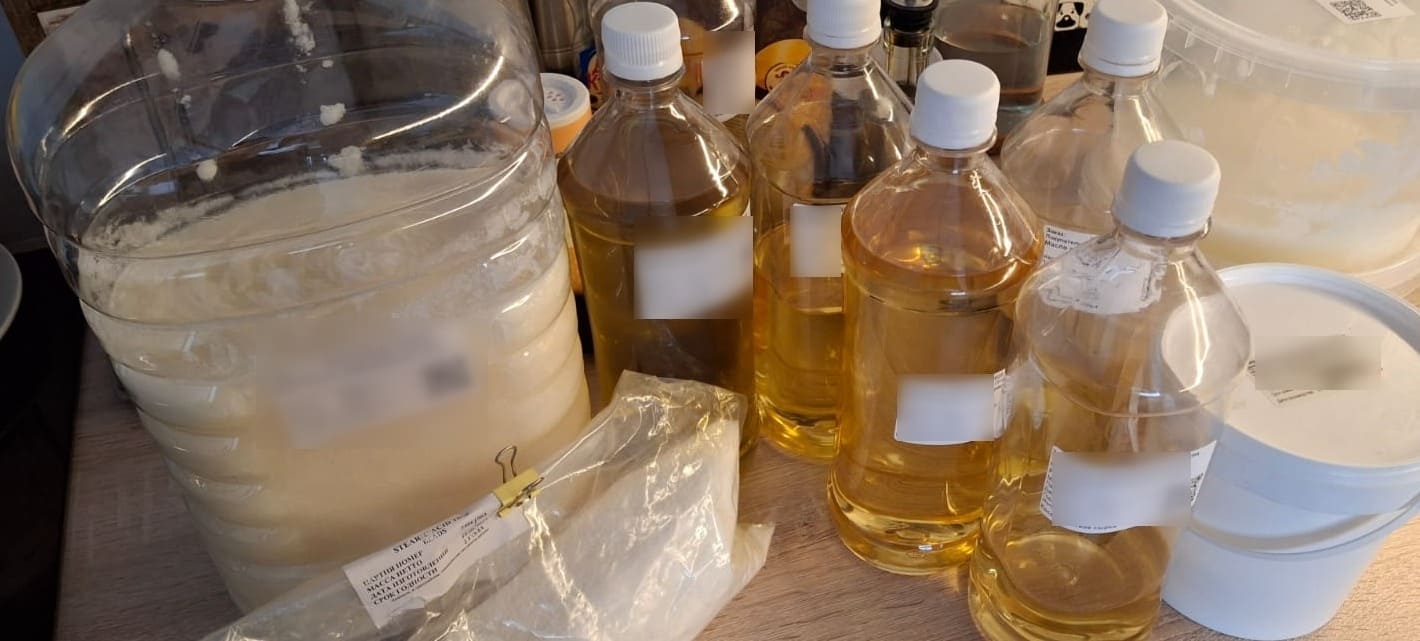
This complexity once created a basic but costly problem: the team could start a production run and then discover that one ingredient was missing. Work stopped for one or two days while the company waited for a new delivery.
With dozens of formulas, memory and separate lists could no longer support reliable purchasing.
How Kladana Connects Formulas, Inventory, and Purchasing
The company now creates a bill of materials, or BOM, for each product. The BOM records every ingredient and the quantity needed for a batch.
Before production begins, the system compares the formula with available inventory. Sergey can see which oils, active ingredients, stabilizers, or packaging materials are missing and purchase them in advance.
The process follows four clear steps:
- The team selects the product and planned batch quantity.
- The ERP calculates the required materials according to the BOM.
- The system shows which components are available and which need to be purchased.
- After production, the team records the completed batch and reviews its actual cost.
This connection reduces last-minute purchasing and gives the team one source of data for production and stock decisions.
| Before ERP | With Kladana |
Ingredient requirements depended on manual checks |
Each product has a structured BOM |
Missing materials became visible after work started |
Stock availability is checked before production |
Purchases reacted to urgent shortages |
Materials can be purchased in advance |
Batch costs were difficult to confirm |
The system calculates the cost after production |
Plan Small-Batch Production with Kladana
Connect formulas with inventory and purchasing. Create BOMs, check material availability, launch production orders, and calculate batch and unit costs in one system.
Why the Company Does Not Produce Larger Batches
Manufacturers often treat higher output as an automatic sign of progress. For MOYABORODA and OLFACTORIUS, a larger batch is useful only when demand can support it.
Natural cosmetics have limited shelf lives. If the company makes 200 units of a slow-moving soap, a large part of the batch may remain unsold. That stock takes up space, ties up working capital, and may eventually require a write-off.
Small batches give the company several advantages:
- fresher products for customers;
- less money tied up in finished goods;
- lower expiry and write-off risk;
- more freedom to test formulas and packaging;
- a faster response to changes in demand.
Kladana makes this model easier to control. A small manufacturer can keep many formulas without trying to produce every SKU in the same quantity. Sales data, current stock, and material availability guide each production decision.
Why Marketplace Fulfillment Did Not Fit Every Product
Third-party marketplaces account for about 90% of the company’s sales. Before this shift, the brands worked mainly with barbershops, often on consignment.
Marketplace sales gave the company faster customer feedback and more detailed sales data, but the first fulfillment model created a new stock problem.
The company initially sent much of its catalogue to an external marketplace warehouse. Yet only 15–20% of its products sold consistently. Most SKUs sold occasionally, while another 10–15 items were seasonal or premium sets with demand only at certain times of the year.
Some products stayed at the marketplace warehouse until their expiry dates approached. The marketplace then asked the company to collect them or have them destroyed. This led to repeated product losses.
The team moved to seller-managed fulfillment. It now stores the products and packs orders each day. Customers may wait about one extra day for delivery, but the company keeps closer control over expiry-sensitive inventory.
This choice shows why fulfillment should follow the sales pattern of each SKU. Marketplace storage may suit fast-moving products. Slow, seasonal, expensive, or short-life items often need tighter control.
How the Manufacturer Protects Its Margin
Marketplace reach comes at a high price. According to Sergey, platform fees, logistics, promotions, discounts, and campaign participation may consume 50–60% of the selling price. The share can rise further during aggressive promotions.
The company can operate under these conditions because it manufactures its own products and tracks their cost. Consider one bottle of beard oil:
| Unit economics indicators | Approximate amount |
Average marketplace selling price |
$15.45 |
Marketplace-related costs |
−$7.72 |
Product cost |
−$3.86 |
Amount remaining before tax and other unallocated expenses |
$3.86 |
The final amount equals about 25% of the marketplace selling price in this example. The founders report an overall profit margin of 24–25%.
However, this figure needs context. The example excludes tax, and the founders do not draw fixed salaries. They reinvest most of the company’s earnings. The percentage should therefore be read as the company’s internal measure, not as a universal net margin benchmark for cosmetics manufacturers.
Precise costing still gives the team a vital advantage. It can see whether a discount leaves enough room to cover production and marketplace expenses. A reseller that buys the same product at a wholesale price would have far less room after platform costs.
Cloud Access Keeps the Owner Close to Daily Operations
Seller-managed fulfillment requires daily attention. Sergey uses Kladana cloud ERP on his phone to see orders, sales, inventory, and urgent issues. He can also compare current performance with the previous year while away from the facility.
The owner does not need a separate report from every employee or a set of spreadsheets at the end of the week. The current business picture is available in one system.
Turn Every Formula Into a Production-Ready BOM
Move recipes out of spreadsheets and connect them with inventory, purchasing, production, and costing. Kladana helps small manufacturers create clear, repeatable BOMs for every product and batch.
With Kladana BOM software, you can:
- Record components, quantities, units, operations, production time, labour costs, and instructions.
- Create multi-level BOMs for products with subassemblies or separately manufactured components.
- Check material availability, reserve stock, and order missing ingredients before production begins.
- Estimate unit costs before launching a batch and compare planned costs with actual results.
- Generate a production order directly from a saved BOM.
A Small Business by Choice
The founders have declined investment and franchise offers. They do not want to increase production only to chase a larger revenue figure. Their priority is to keep control over formulas, product quality, and the way the team works.
MOYABORODA and OLFACTORIUS use ERP to keep a complex operation manageable without building a large administrative team. The system supports the type of business the founders want: compact, profitable, flexible, and close to its products and customers.
Their son already helps with parts of the business. The founders see the company as a family project that may continue into the next generation.
📚 Recommended Reads
Unicorn Natural Products Manufacturing: A Journey from Spreadsheets to ERP
See how an Indian producer of plant extracts and essential oils started moving its inventory and production records from Excel to ERP.
Artisanté: How to Streamline Chocolate and Coffee Manufacturing Management
Learn how a family-run chocolate and coffee manufacturer simplified raw material planning, purchasing, production, and cost tracking with Kladana.
Body Motion: Improved Cash Flow and Eliminated Double Buying
Discover how a South African apparel manufacturer replaced scattered spreadsheets, stopped duplicate purchases, and gained better control over inventory and production.
Plumbing Plus: Managing 15,000 SKUs Across Four Stores
See how a plumbing retailer uses sales data to plan seasonal purchases, manage 15,000 product names, and prevent slow-moving items from becoming dead stock.
Lifehacks for Other Small Manufacturers
The experience of MOYABORODA and OLFACTORIUS offers several practical lessons.
- Count complexity, not only production volume. A small factory with 100 formulas may need stronger controls than a larger factory with a narrow product range.
- Link every formula to live inventory. A BOM provides more value when it can check current stock and support purchasing.
- Plan batch size around demand and shelf life. Large runs may lower production cost per unit but increase waste and working capital needs.
- Choose fulfillment by SKU. Fast sellers and seasonal products do not always belong in the same warehouse model.
- Calculate margin after channel costs. Marketplace commission is not the only expense. Add logistics, promotions and discounts before approving a campaign.
- Use cloud data to keep a compact team aligned. Shared, current information can replace many manual reports and status checks.
To Sum It Up
MOYABORODA and OLFACTORIUS show that small-batch manufacturing can become operationally complex long before a company becomes large.
With about 100 SKUs, short shelf lives, marketplace demand, and formulas that contain up to 26 ingredients, the team needs more than a simple stock list. Kladana connects each product formula with raw materials, purchasing, production, and cost data.
The result is greater control over ingredient availability, batch costs, finished stock, and fulfillment decisions. The company can keep production small without running the business on guesswork.