South Africa OMS software helps retailers, e-commerce brands, distributors, and logistics teams manage orders from one place. It connects sales channels, stock, warehouses, deliveries, returns, and customer updates.
Verified Market Research values the order management software market at USD 2.95 billion in 2024, with projected growth at 5.48% CAGR through 2032. Maximize Market Research estimates the omnichannel OMS market at USD 2.62 billion in 2024, with growth to USD 5.78 billion by 2032 at 10.41% CAGR.
This matters more as online retail grows. More online orders mean more pressure on order accuracy, delivery speed, stock control, and customer communication.
This guide compares top OMS solutions in South Africa and explains how to choose the right setup for your business.
- What Is an Order Management System?
- Why OMS Matters in South Africa
- Key Selection Criteria for South African OMS
- Comparison of Top OMS Solutions in South Africa
- Implementation Best Practices and Common Pitfalls
- South African Case Example: Body Motion
- ROI and Business Justification
- Next Steps and Buyer Roadmap
- To Sum It Up
- FAQ on South Africa Top OMS Software
What Is an Order Management System?
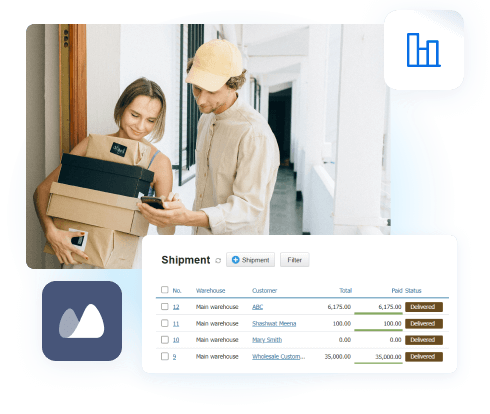
An order management system, or OMS, is software that controls the full order lifecycle. It starts when a customer places an order and ends when the order is delivered, returned, refunded, or closed.
A good OMS answers simple but critical questions:
- Where did the order come from?
- Is the item in stock?
- Which warehouse should ship it?
- Has the customer paid?
- Which courier should deliver it?
- Has the order been packed, shipped, or returned?
Without an OMS, teams often use spreadsheets, WhatsApp messages, e-commerce admin panels, courier portals, and accounting software at the same time. That creates delays and errors.
Core OMS modules and capabilities
Most OMS solutions in South Africa include these features:
| OMS module | What it does |
| Order capture | Pulls orders from websites, marketplaces, sales reps, POS, or B2B portals |
| Inventory sync | Checks stock before the order is confirmed or shipped |
| Order routing | Sends the order to the right warehouse, branch, store, or 3PL |
| Fulfilment tracking | Shows whether an order is picked, packed, shipped, delivered, or delayed |
| Returns management | Tracks returns, refunds, exchanges, and restocking |
| Customer updates | Sends order status, tracking links, and delivery messages |
| Analytics | Shows late orders, cancelled orders, stockouts, returns, and fulfilment speed |
Advanced systems also support order splitting, backorders, multi-warehouse order routing, approval workflows, and courier rules.
OMS vs ERP vs WMS vs e-commerce platform
Many businesses confuse OMS, ERP, WMS, and e-commerce software. They overlap, but they do different jobs.
| System | Main purpose | Example use |
| OMS | Controls order flow | Route a Shopify order to the right warehouse |
| ERP | Controls business records | Manage sales, purchases, stock, finance, and production |
| WMS | Controls warehouse tasks | Pick, pack, scan, and move items inside a warehouse |
| E-commerce platform | Controls online store | List products, accept payments, and manage checkout |
A small online store may start with Shopify or WooCommerce only. But once orders come from several channels, stock sits in several locations, and returns become common, a separate OMS or ERP-connected OMS becomes useful.
Kladana fits this space for SMEs that need order management, inventory, purchasing, warehousing, CRM, and production tools in one cloud ERP. Its order tools support sales orders, purchase orders, order statuses, delivery, workflow automation, and online orders.
Why OMS Matters in South Africa
South African retailers and distributors face a practical challenge: customers expect fast delivery and clear tracking, but operations often depend on several disconnected tools.
An OMS reduces that gap. It gives the team one place to check orders, stock, delivery status, and exceptions.
Trends driving OMS adoption
E-commerce growth is the main driver. More South African shoppers buy online, and retailers now sell through websites, marketplaces, social channels, stores, and sales teams.
This creates more operational pressure:
- More daily orders
- More courier handovers
- More returns
- More stock movements
- More customer status requests
- More chances to sell items that are not available
The omnichannel order management system market is also growing worldwide. Kings Research valued the omnichannel order management system market at $4.54 billion in 2024. The firm projects the market to grow from $4.96 billion in 2025 to $10.07 billion by 2032, at a 10.27% CAGR during the forecast period.
Common challenges in South Africa
South African firms often need OMS software because of these problems:
| Challenge | OMS benefit |
| Several couriers | Compare, assign, and track deliveries |
| Several warehouses or branches | Route orders based on stock and location |
| Manual stock updates | Reduce overselling and missed orders |
| Weak order visibility | See each order status in one dashboard |
| Returns handled by email | Track return reasons, refunds, and restocking |
| Local tax needs | Keep VAT and invoice data clean |
VAT also matters. A full South African VAT invoice must include details such as the words “Tax Invoice,” supplier details, VAT registration number, serial number, and date of issue. Your OMS does not replace tax advice, but it should pass clean order and customer data to your invoicing or ERP system.
Global vs local vendors
South African buyers usually choose between three types of OMS vendors:
| Vendor type | Best for | Risk |
| Local or regional tools | Local courier workflows and local support | May have fewer ERP features |
| Global OMS platforms | Multi-channel order orchestration and scale | May need more setup and budget |
| ERP-based OMS | Orders, stock, purchasing, and finance in one system | May need process setup before launch |
For many SMEs, the best choice is not the biggest system. It is the one your team can implement and use without constant IT help.
Key Selection Criteria for South African OMS
Before comparing vendors, write down how orders move through your business today. Then match software features to real bottlenecks.
Multi-channel and omnichannel support
Choose OMS software that can capture orders from your actual sales channels.
Check support for:
- Shopify
- WooCommerce
- Marketplaces
- POS
- B2B orders
- Sales reps
- Manual orders
- Phone or email orders
The system should also keep stock consistent across channels. This is what prevents the same item from being sold twice.
Local compliance and VAT data
For South Africa, look for clean invoice data, customer records, tax fields, and document numbering. The OMS should connect well with your ERP or accounting system, so VAT reporting does not become a manual clean-up task.
Ask vendors:
- Can we store VAT numbers?
- Can we pass invoice data to accounting?
- Can we keep serial order and invoice numbers?
- Can we export order data for audit checks?
Integration with ERP, CRM, WMS, and logistics partners
An OMS should not sit alone. It needs to exchange data with the systems that run your business.
Typical integrations include:
- ERP
- Inventory system
- WMS
- CRM
- Accounting software
- E-commerce platform
- Courier aggregator
- 3PL system
- Payment gateway
Deployment model
Most growing SMEs prefer cloud OMS South Africa options because they are easier to launch and maintain. Cloud tools reduce server work, support remote access, and allow faster updates.
On-premise or hybrid systems may suit large enterprises with strict IT rules, legacy infrastructure, or deep custom needs.
Vendor support in South Africa
Support is not a small detail. It can decide whether implementation works.
Check:
- Local or regional partner presence
- Support hours
- Onboarding format
- Training materials
- Response times
- Data migration help
- Integration support
In the Body Motion case story, the South African apparel manufacturer chose Kladana after testing 40+ ERP systems. Fast support and ease of use were key factors. In six months, the company moved away from scattered spreadsheets, reduced double buying, and improved cash flow.
Pricing and total cost
OMS pricing in South Africa may include more than a license fee.
Plan for:
- Software subscription
- Implementation
- Data migration
- Integrations
- API work
- Training
- Support
- Custom reports
- Extra users
- Courier or shipping costs
A cheaper tool can become expensive if it needs too much manual work. A larger system can also become wasteful if your team uses only 20% of its features.
Comparison of Top OMS Solutions in South Africa
Here is a practical comparison of OMS-related software options available to South African businesses. Some are dedicated OMS platforms, some are ERP systems with order management modules, and some focus mainly on shipping, fulfilment, or purchase order visibility.
| Solution | Best for | Strong points | Watch out for |
| Kladana | SMEs, manufacturing, e-commerce | Orders, inventory, purchasing, warehouse, CRM, documents, production in one cloud ERP | Best for teams that want ERP-connected order control, not only courier booking |
| Omniful | Retailers and e-commerce firms with multi-channel fulfilment | Order routing, inventory allocation, fulfilment workflows, order tracking | Check local integrations carefully; some South Africa page details look reused from other regions |
| SYSPRO | Manufacturers and distributors | ERP-based sales orders, customer account data, invoicing, stock, distribution | May be more suitable for mid-market and larger operational setups |
| Sage | Small and mid-sized firms with accounting needs | Order processing, inventory tracking, returns, reporting, finance links | Best fit depends on Sage product line and partner setup |
| Oracle Order Management | Large enterprises | Advanced order orchestration, pricing, fulfilment, enterprise controls | Too heavy for many SMEs |
| Bob Go | South African e-commerce shipping teams | Courier rates, shipping labels, tracking, store integrations, API | More shipping-focused than a full OMS or ERP |
| DHL Order Management Solutions / Purchase Order Management | Importers, exporters, global supply chain teams | Purchase order tracking, freight visibility, supplier and carrier coordination | Not a retail OMS for daily online orders |
Vendor notes
Kladana
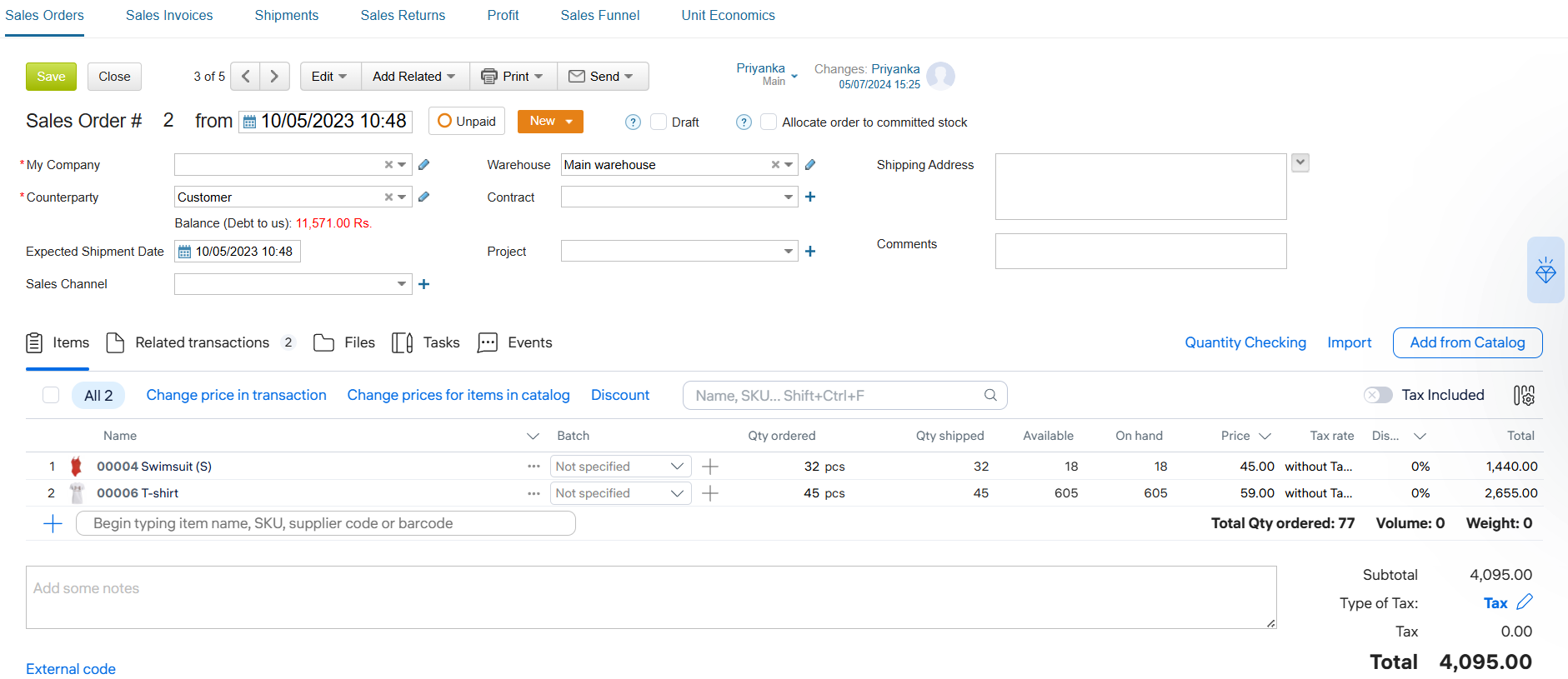
Kladana is a cloud ERP for small and medium businesses. It helps manage order statuses, stock, purchases, deliveries, warehouses, CRM, and documents in one system. It is a good fit for companies that want to connect order management with inventory and backend operations.
Omniful

Omniful promotes OMS features for South Africa, including smart order routing, inventory visibility, fulfilment workflows, and tracking. However, its South Africa page mentions integrations such as noon and Amazon.ae, so buyers should verify whether its marketplace, courier, and support setup is truly local to South Africa.
SYSPRO
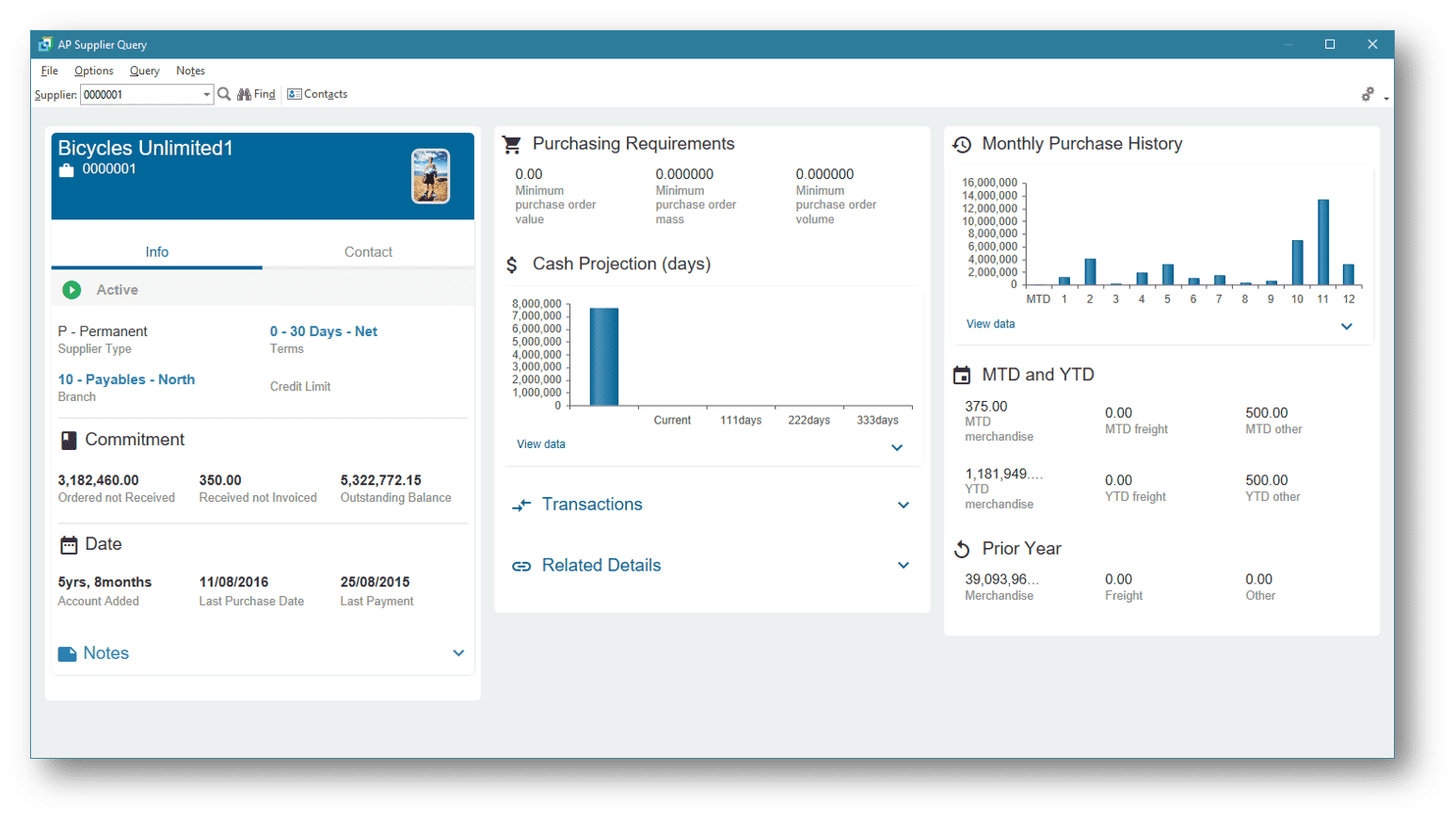
SYSPRO is strong for manufacturers and distributors. Its order management system gives access to customer account details, credit limits, previous orders, billing and shipping addresses, invoicing, and shipping workflows.
Sage South Africa
Sage offers order management tools that support online and offline sales channels, returns, customer updates, order status, shipping, delivery, and inventory tracking. It can suit firms that want order management close to finance and accounting.
Oracle Order Management
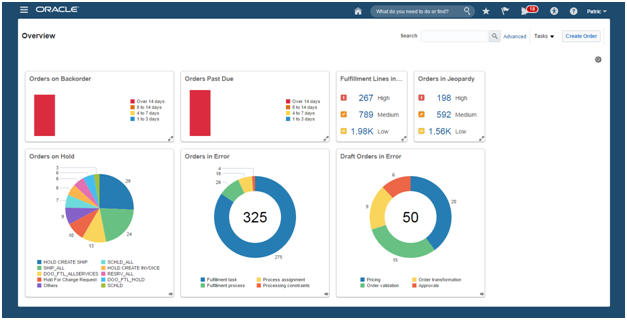
Oracle is best for enterprises with high order volumes, many business units, and advanced order rules. It is usually not the first choice for small teams moving away from spreadsheets.
Bob Go
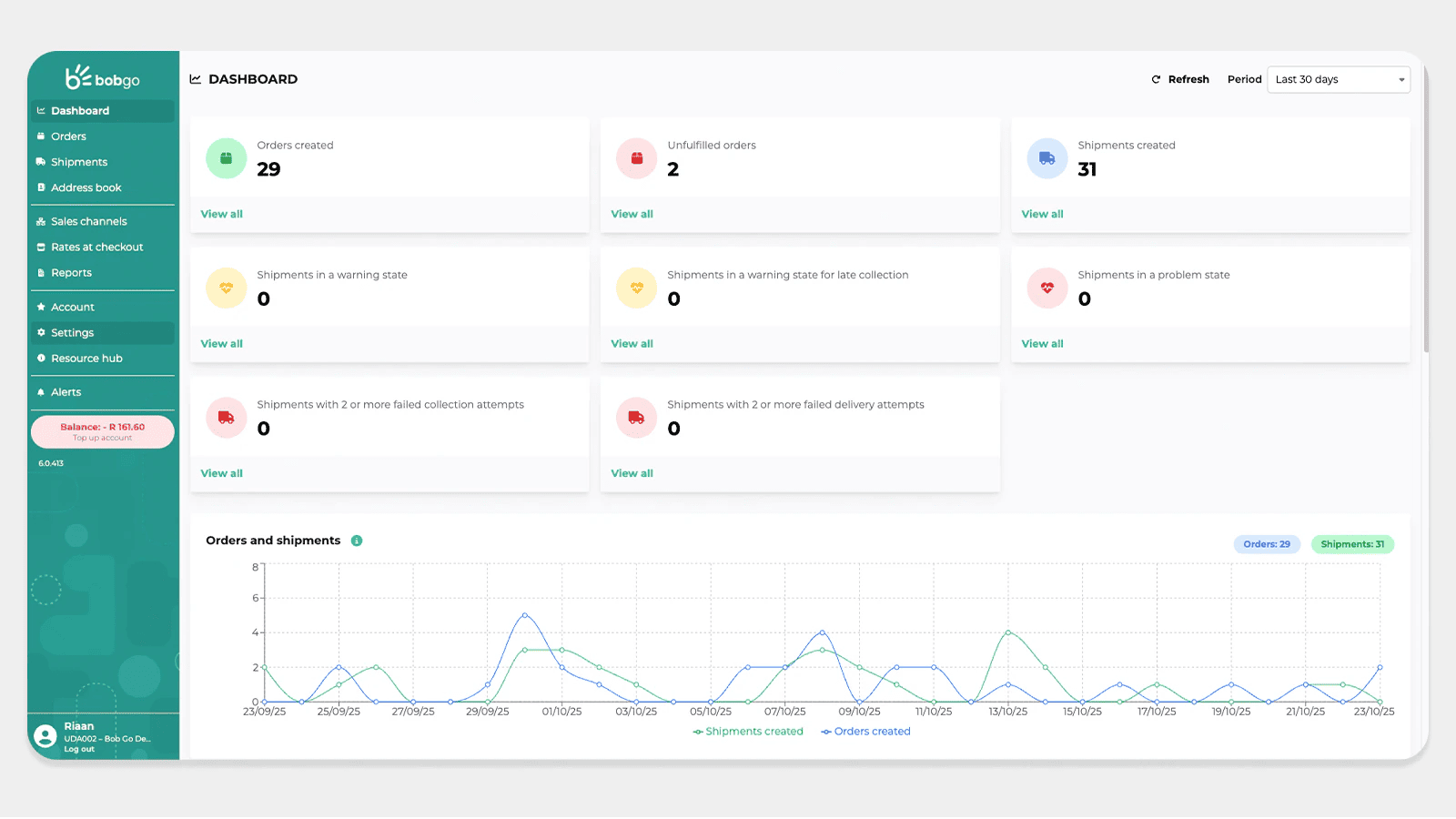
Bob Go is a strong local option for e-commerce shipping. It connects stores, compares courier rates, creates shipments, syncs orders, and tracks deliveries. It also offers an open API and sandbox for custom shipping workflows.
DHL Order Management Solutions / Purchase Order Management
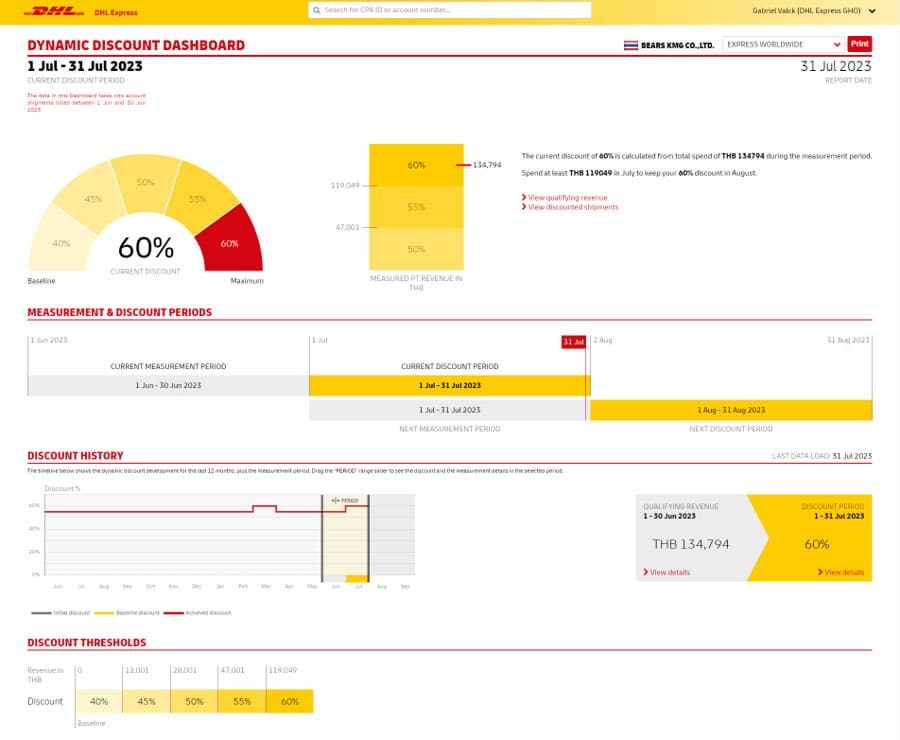
DHL is more relevant for freight-heavy companies that need purchase order visibility across suppliers, carriers, and international supply chains.
Implementation Best Practices and Common Pitfalls
A new OMS changes daily work. Treat it as an operations project, not only a software purchase.
Start with a pilot
Do not move every order flow at once. Start with one channel, one warehouse, or one product group.
A good pilot includes:
- One sales channel
- One warehouse
- Real orders
- Clear success metrics
- A fallback process
- Daily issue tracking
Once the team can process orders without confusion, add more channels and rules.
Clean your data before migration
Bad data creates bad automation.
Check these records before import:
- Product names
- SKUs
- Barcodes
- Stock levels
- Warehouse names
- Customer details
- Supplier details
- Tax fields
- Price lists
If the same item appears under five names, the OMS cannot route orders correctly.
Train users by role
A warehouse picker does not need the same training as a finance manager. Train each team on the tasks they do every day.
For example:
| Role | Training focus |
| Sales team | Create orders, check status, handle customer updates |
| Warehouse team | Pick, pack, dispatch, scan, update exceptions |
| Finance team | Invoice data, payments, tax records, refunds |
| Manager | Dashboards, delays, stockouts, performance reports |
Test exceptions, not only perfect orders
Many OMS failures happen outside the happy path.
Test these cases:
- Partial stock
- Wrong address
- Cancelled order
- Failed payment
- Split shipment
- Returned item
- Damaged item
- Backorder
- Courier delay
- Duplicate order
Your team needs clear rules for each case.
South African Case Example: Body Motion
Body Motion is a South African sportswear and medical apparel manufacturer. Before Kladana, the company used spreadsheets to manage stock and production. As the product range grew, the team struggled with fabric, zippers, buttons, finished goods, and order visibility.

The company tested more than 40 ERP systems and chose Kladana. The main reasons were fast support, ease of use, and practical production and inventory features. After six months, Body Motion reduced double buying, improved cash flow, and gained better control over weekly planning.
This case is useful for OMS buyers because it shows a common problem: order delays often start with poor stock visibility. If a business cannot see what it has, where it is, and what is already reserved, it cannot promise delivery dates with confidence.
📚 Recommended Reads
Want to see how companies use Kladana in real business operations? These customer stories show how growing teams improved stock control, order visibility, production planning, and daily workflows.
- Neytthomes: Managing Stock Across 10 Locations
A high-fashion rugs and carpets brand uses Kladana to manage daily operations, track KPIs, and control stock across multiple locations. - Jtronix: ERP for PCB Board Production
An Indian engineering R& D company explains how Kladana helped organize high-precision manufacturing processes. - Artisanté: Chocolate and Coffee Manufacturing Management
A confectionery and coffee brand shares how it uses Kladana to manage production and e-commerce operations. - “Space” Lemonade: Beverage Manufacturing and Warehouse Transfers
A beverage manufacturer shows how Kladana helps manage production data, orders, documents, and warehouse transfers. - More Ryadom: Seafood Wholesale and Retail Business Story
A seafood company shares how it grew online and offline sales while managing perishable stock and wholesale orders.
ROI and Business Justification
The return on OMS software comes from fewer mistakes, faster order processing, and better stock control.
Main cost drivers
Budget for these items:
- Monthly or annual license
- Number of users
- Number of sales channels
- Warehouse count
- API or connector work
- Data migration
- Training
- Support
- Custom reports
Ask each vendor for both launch cost and yearly running cost.
Main benefits
OMS benefits are easier to defend when you link them to numbers.
Track:
- Order processing time
- Late orders
- Picking errors
- Return rate
- Cancelled orders
- Oversold items
- Customer support tickets
- Courier disputes
- Time spent on manual updates
For example, if your team spends two hours per day copying orders between systems, automation can save about 40 hours per month. If order errors lead to refunds, reshipping, and customer complaints, even a small accuracy gain can protect margin.
Simple payback formula
Use this quick estimate:
Monthly OMS benefit = labour savings + error reduction + fewer stockouts + lower fulfilment waste
Payback period = implementation cost ÷ monthly OMS benefit
This is not a perfect finance model, but it helps compare options before you request a demo.
Next Steps and Buyer Roadmap
Before booking vendor demos, prepare a short OMS selection brief.
Step 1: Map your order flow
Write down how an order moves today:
- Order received
- Payment checked
- Stock checked
- Warehouse assigned
- Items picked
- Order packed
- Courier booked
- Customer updated
- Invoice issued
- Return or refund handled
Mark every manual step. Those are your automation targets.
Step 2: List must-have integrations
Create a table like this:
| System | Current tool | Integration needed |
| Online store | Shopify / WooCommerce | Pull orders and update stock |
| Inventory | ERP or spreadsheet | Sync available stock |
| Warehouse | WMS or manual process | Send pick and pack tasks |
| Accounting | Accounting software | Send invoice and payment data |
| Delivery | Courier / aggregator | Create shipment and tracking link |
Step 3: Ask better demo questions
Use these RFP questions:
- Can the OMS sync stock across all sales channels?
- Can it route orders by warehouse, stock, location, or courier rule?
- Can it split orders and manage backorders?
- Can it handle returns and refunds?
- Can it connect with our ERP or inventory system?
- Can it pass VAT and invoice data cleanly?
- Can users customize order statuses?
- Does it support API access?
- What happens if an integration fails?
- What support do we get during launch?
Step 4: Run a proof of concept
Use real orders, real SKUs, and real warehouse rules. Do not judge the system only by demo data.
A good proof of concept should show:
- Order capture
- Stock check
- Warehouse routing
- Picking or packing step
- Delivery booking
- Customer update
- Invoice or ERP sync
- Return flow
If the proof of concept works, you can plan rollout with lower risk.
To Sum It Up
The best OMS South Africa choice depends on your order volume, sales channels, warehouse setup, and budget.
Choose Bob Go if your main pain is courier booking and shipping automation. Choose SYSPRO or Sage if you already use their ERP or accounting tools and want order management inside that setup. Choose Oracle if you are an enterprise with advanced order rules and a large IT team. Choose Kladana if you are an SME that needs order management, inventory, purchasing, warehouse workflows, CRM, and documents in one cloud system.
The right OMS should reduce manual work, prevent overselling, speed up fulfilment, and give your team clear order visibility.
FAQ on South Africa Top OMS Software
Here are short answers to common questions about South Africa OMS software, vendor selection, pricing, implementation, and integrations.
What is an order management system?
An order management system is software that tracks and controls orders from order capture to delivery, return, or refund.
How is OMS different from ERP?
OMS focuses on order flow. ERP manages wider business records, such as stock, purchasing, finance, CRM, production, and reporting.
How is OMS different from WMS?
OMS decides how an order should move. WMS manages warehouse tasks such as picking, packing, scanning, and bin movements.
Why do South African businesses need an OMS?
They need OMS software to manage multi-channel orders, courier handovers, returns, stock visibility, and customer updates without manual work.
What is the best OMS for retail South Africa?
The best option depends on the setup. Retailers should compare channel integrations, inventory sync, returns, courier support, VAT data, and local support.
What is cloud OMS South Africa?
Cloud OMS software runs online. Teams can access orders, stock, and dashboards from different locations without managing their own servers.
Which local OMS providers South Africa should I check?
Bob Go is a strong local shipping and order workflow option. South African firms can also compare ERP-based tools and cloud OMS providers with local partner support.
How much does OMS software cost in South Africa?
Costs depend on users, order volume, integrations, warehouse count, and support. Always compare total yearly cost, not only the monthly fee.
Can OMS software handle VAT?
An OMS can store and pass order, customer, tax, and invoice data. VAT compliance still depends on your invoice setup and accounting process.
How long does OMS implementation take?
A simple setup can take a few weeks. A multi-channel, multi-warehouse rollout with ERP and courier integrations can take several months.
List of Resources
- Verified Market Research — Global Order Management Software Market Size By Deployment Type (Cloud-based Order Management Software, On-premise Order Management Software), By End-User (Retail, E-commerce), By Functionality (Order Capture, Inventory Management), By Geographic Scope And Forecast
- Maximize Market Research — Omni-channel Order Management Systems Market Size by Component, Enterprise Size, Applications, and Region — Segment-Level Market Assessment, Growth Opportunity Analysis, Competitive Mapping & Forecast to 2032
- Kings Research — Omnichannel Order Management System Market